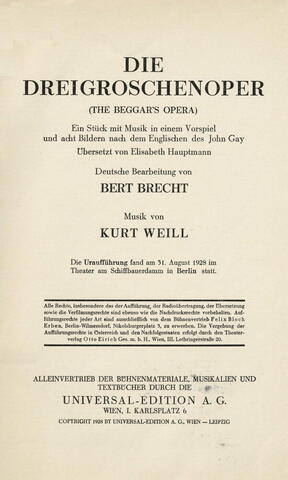
On the night of 31 August 1928, a new work by Bertolt Brecht, with music by a young Jewish composer from Dessau opened at the Theater am Schiffbauerdamm in Berlin. Nobody quite knew what to make of it. By morning, Bertolt Brecht and his collaborator Kurt Weil were famous.
The Threepenny Opera was unlike anything Berlin had heard before. It blended jazz, cabaret and classical music with savage political satire, and it captured something true and uncomfortable about Weimar Germany. It ran for 400 performances and was translated into 18 languages within a year.
Weill had been born in 1900 in Dessau into a Jewish cantor’s family. When the Nazis came to power in 1933, his works were immediately banned. He fled to Paris, then to New York, where he rebuilt his career on Broadway. He never returned to Germany.
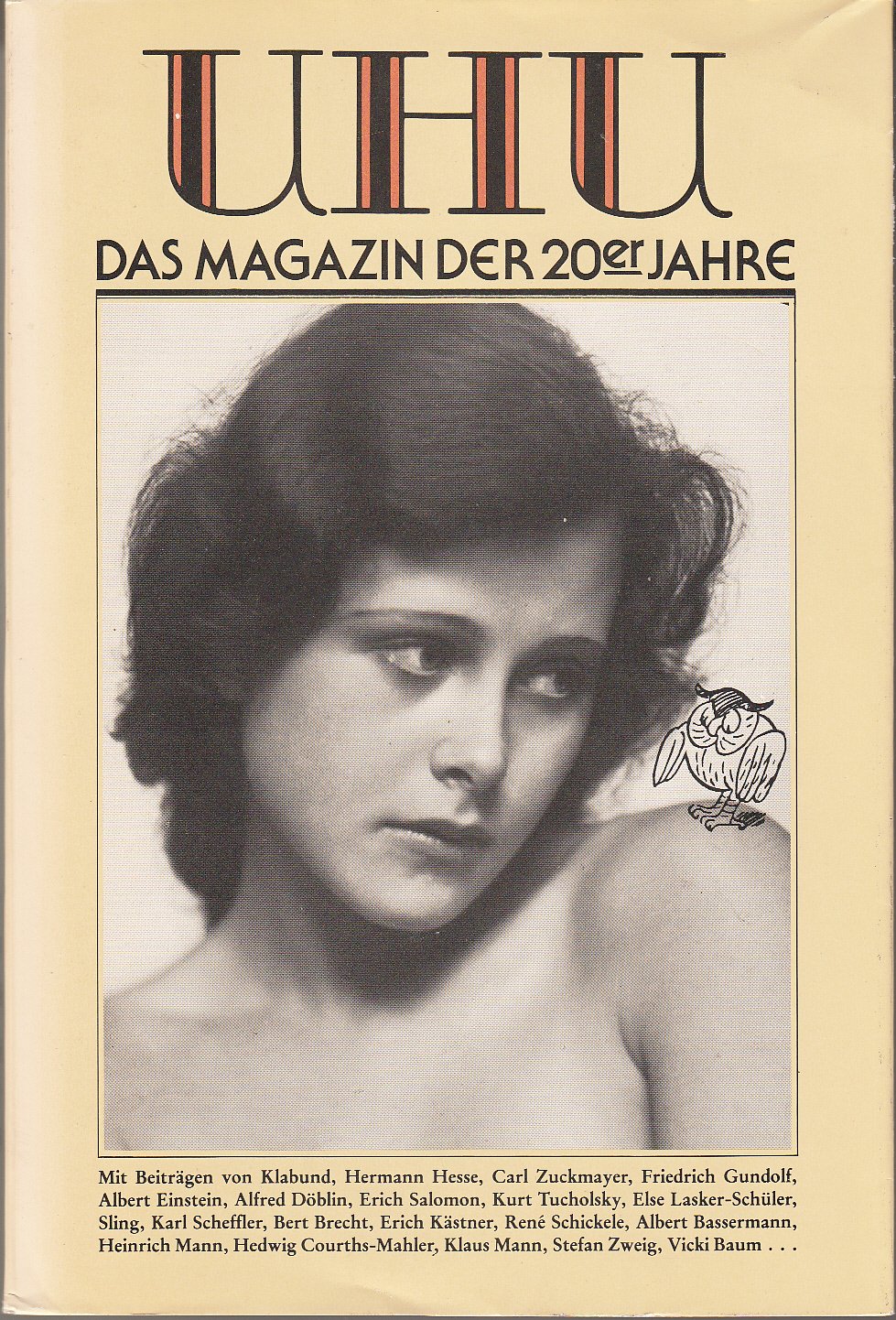
The extraordinary creative world of 1920s Berlin that produced the Threepenny Opera is documented in the LBI London library collection, now at Senate House Library in Bloomsbury. The collection includes Uhu : das Magazin der 20er Jahre, a facsimile reprint of one of Weimar Berlin’s leading cultural magazines, giving a vivid picture of the world Brecht and Weil inhabited.
Find out more: https://www.lbilondon.ac.uk/library
Image: Wiki