Hebrew University of Jerusalem
Immigration and Education: Jewish Pedagogues and the Pedagogical Discourse in Palestine 1918-1939
In 1925, teacher David Idelson shared a pivotal insight with his colleague Yehuda Polani, reflecting on their educational endeavors in Tel Aviv: ‘We were the novelty!’ Both had migrated to Jerusalem from Germany in 1905 and were united by a vision for innovative Jewish education, inspired by cutting-edge Central European pedagogical methods. This journey from theory to practice reached its peak in 1922 with the founding of a distinctive school in Tel Aviv, promoting autonomy for teachers and child-led learning.
The Children Community School stands as one of four key studies in this book, examining significant themes in the educational discourse in pre-state Israel and the formation of Hebrew education. The work delves into important milestones in the history of Hebrew education spanning more than half a century: the revival of the Hebrew language; building Hebrew teacher training; pedagogical innovation and its relationship with political ideologies; and the role of Eros in education. This historical perspective offers valuable insights, pertinent to ongoing educational debates.
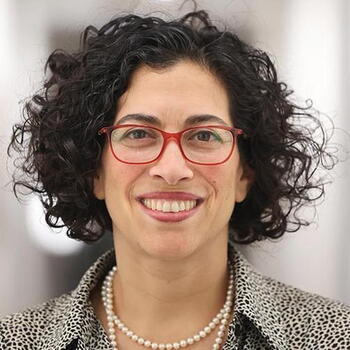
Dr. Miriam Szamet is a historian of education whose work focuses on the development of modern Jewish education from the late nineteenth century to the present. A faculty member at the Jack, Joseph and Morton Mandel Foundation in Jerusalem, her work is situated within intellectual history and examines the interrelations between education, nation-building, language, and social transformation in modern Jewish society, with a particular emphasis on Israel. She is the author of a scholarly monograph on the history of education conducted in modern Hebrew and is currently researching women educational leaders, especially the life of Pua Rakovsky, a leading Jewish educator in fin-de-siècle Warsaw.
As a former Leo Baeck Institute Fellow, Dr. Szamet is particularly interested in processes of knowledge transfer, translation, and circulation across German traditions of educational thought, broader European professional contexts, and the evolving educational culture of pre-state Israel. This work conceptualizes these relations as entangled histories, tracing how pedagogical concepts, professional languages, and institutional models were reshaped through their circulation between German traditions of educational thought, broader European professional contexts, and the evolving educational culture of pre-state Israel.