This year’s Leo Baeck essay prize for recent PhDs in German-Jewish studies goes to Nick Block for his essay On Nathan Birnbaum’s Messianism and Translating the Jewish Other. The article was published in the 2015 volume of the Leo Baeck Institute Year Book.
Messianic longing ignited European Jewish thought in the late nineteenth and early twentieth centuries. In this time of historical rupture, European Jews from the more traditional East to the acculturated and affluent West were recycling older notions of the Messiah and his advent in a bid to shape the discourse on possible Jewish futures. Zionism’s call for a return to the Land of Israel made the political arena the most readily apparent cultural sphere steeped in messianic discourse, though messianic themes were woven throughout the era’s politics, literature, and the arts. Yiddish literature offered a wellspring of Jewish tales about the Messiah and his messenger Elijah the Prophet. This article demonstrates that at the nexus of literature and politics in the early 1900s, the political activist and author Nathan Birnbaum came to embody the recurring literary figure of a messianic saviour from the West. The famous religious awakening of the Viennese-born Birnbaum included an assumption of an eastern European Jewish identity, one which, I argue, is rooted in his reading of Yiddish literature’s desire for a German-Jewish redeemer. As a translator of Yiddish works including Y. L. Peretz’s short stories, Birnbaum knew about the fantastic, messianic, and simultaneously damning reception of German Jews in eastern Europe. He came to see himself as a potential messiah and used his intercultural position to convey this image among European Jewry.
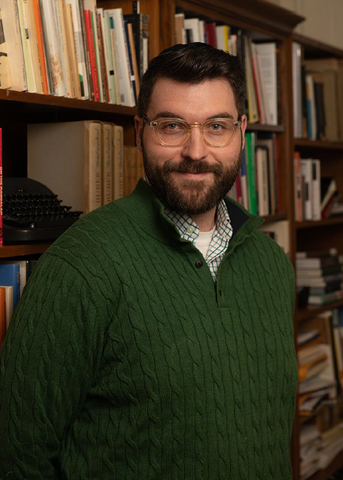
Nick Block is Associate Professor of the Practice for German Studies and Jewish Studies at Boston College. His research interests more broadly engage with German-Jewish intellectual history, Yiddish literature, Jewish-Muslim relations in contemporary German culture, Orientalism, and the quest for a new language in German literature since 1945.