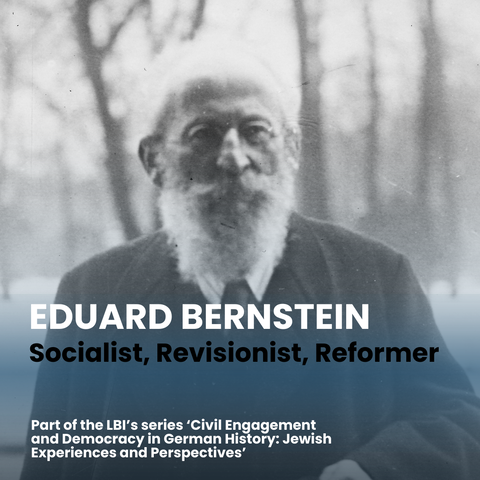
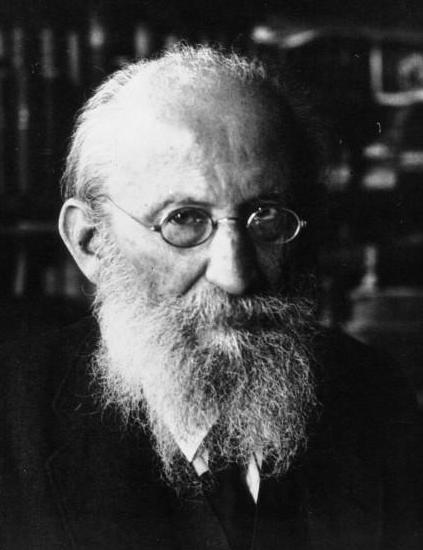
Eduard Bernstein (1850–1932) was a German Social Democrat, democratic socialist, and founder of revisionism. From 1878 onwards, he lived abroad, working as a journalist and making a name for himself as a critic of Marxist theory. Bernstein, for example, rejected the idea of an inevitable collapse of capitalism. Instead of revolution, he placed his hopes in democratic reform, approved of cooperation with liberal forces, and advocated the creation of a socialist people’s party.
Klaus Leesch holds a doctorate in history and works as a librarian and press archivist. In 2024, he published Eduard Bernstein (1850–1932). Leben und Werk with Campus Verlag the first academic biography of this key figure in German Social Democracy.
Lutz Vössing spoke with Dr Klaus Leesch about Bernstein’s life as a champion of socialist reform.
From what kind of family and social background did Eduard Bernstein come?
Eduard Bernstein was born on 6 January 1850 into a large railway workers’ family belonging to Reform Judaism. His birthplace was within sight of what is now the headquarters of the SPD, the Willy-Brandt-Haus in Berlin-Kreuzberg, then located at Anhaltinische Kommunikation 12 (today Stresemannstraße). The family rented a modest flat in Kreuzberg. Meat was eaten only occasionally, and water had to be drawn from a well. Yet, unlike many of their classmates, the Bernstein children always had socks and shoes. Jewish families at that time placed particular importance on proper clothing and, above all, a good education for their children.
What prompted Bernstein to go into exile, and what role did Bismarck’s Anti-Socialist Law play?
Strictly speaking, Bernstein did not flee into exile. In the autumn of 1878, Karl Höchberg, a patron of the Social Democratic movement, offered him a position as secretary. Bernstein accepted and left for Switzerland a week before Bismarck’s Anti-Socialist Law threatened to suppress the SPD altogether. The party and the workers’ movement in Prussia were already under immense pressure. After the law’s enactment, repression intensified sharply with bans, prison sentences, and expulsions becoming routine. Publishing socialist material was prohibited, which is why ‘Der Sozialdemokrat. Internationales Organ der Sozialdemokratie deutscher Zunge’ began being published in Switzerland and smuggled into Germany in 1879..
When and under what circumstances did Bernstein return to Germany?
After ‘Der Sozialdemokrat’ ceased publication in 1890, Bernstein remained in London, working mainly as a correspondent for ‘Vorwärts’ and ‘Die Neue Zeit’. His theoretical reflections, later grouped under the label of revisionism, provoked fierce opposition from figures such as Karl Kautsky, party leader August Bebel, much of the dogmatic party centre, and the radical left. The personal strain on Bernstein was significant. Despite difficulties, his wish to return grew stronger. The liberal politician Paul Nathan appealed to Chancellor von Bülow to permit his re-entry, hoping that Bernstein’s revisionist views might divide the SPD. Bernstein and his wife Regina returned to Berlin in early February 1901. He resumed his work as a journalist and editor and was elected SPD member of the Reichstag for Breslau-West in 1902.
Who were Bernstein’s early political allies and adversaries?
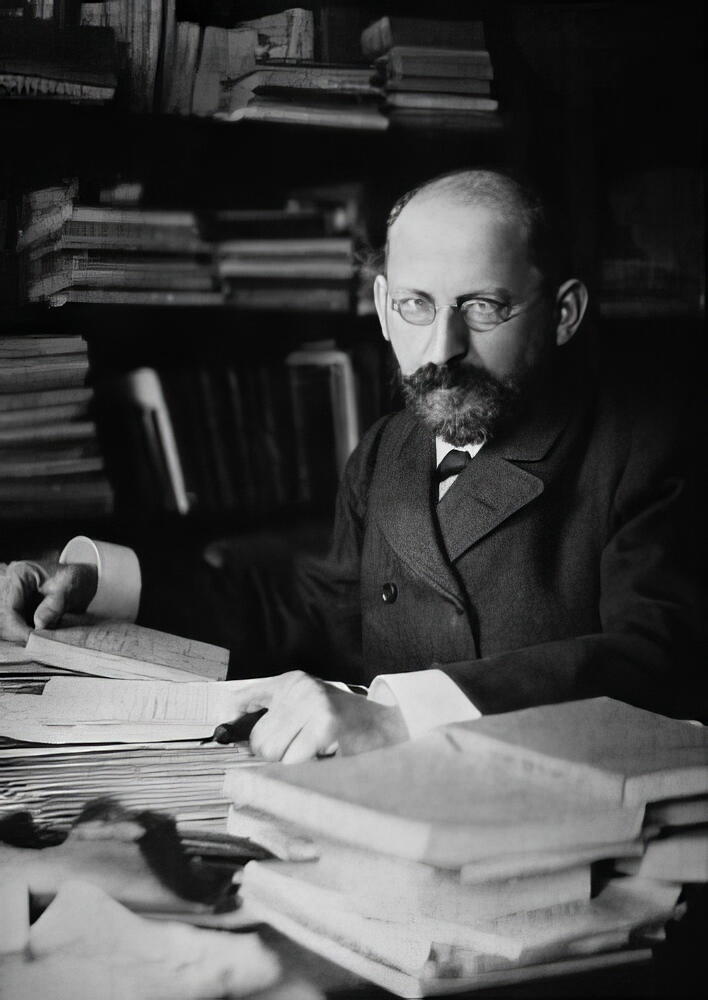
Bernstein’s first lifelong friend in politics was Willi Bading, with whom he joined the young SPD. Another crucial ally was Ignaz Auer, a senior party figure who oversaw its entire organisational apparatus. Auer protected and supported Bernstein until his death. The publisher J. H. W. Dietz was another key supporter, providing both financial and moral backing. During the peak of the revisionist disputes (circa 1898–1903), Bernstein’s opponents included Karl Kautsky, August Bebel, many party delegates aligned with Kautsky’s interpretation of Marxism, and the radical left, personified by Rosa Luxemburg. Other prominent critics included Georgi Plekhanov, Alexander Parvus (Alexander Helphand), and Vladimir Ilyich Lenin.
How did Bernstein’s collaboration with Friedrich Engels shape his thought?
It is inaccurate to portray Bernstein as a subordinate of Friedrich Engels. Bernstein was an independent author, not Engels’s assistant. He conceived and published all his writings on his own responsibility. Although he regarded Engels as an intellectual authority and corresponded with him while in Zürich, Bernstein’s editorial and theoretical work was autonomous. Engels valued Bernstein’s independent judgement and did not seek a disciple. As Bernstein himself wrote in 1901, claiming full authorship of his ideas, this relationship was one of mutual respect rather than hierarchy.
Which core assumptions of Marxism did Bernstein adopt, and which did he reject?
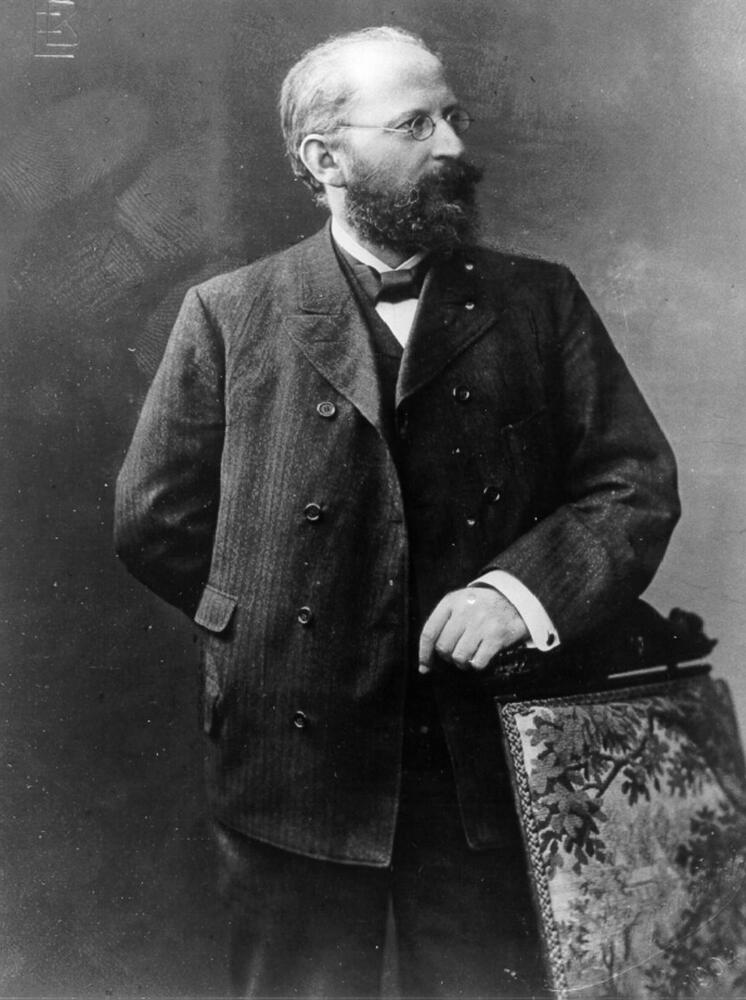
As a revisionist, Bernstein still considered himself a Marxist. He accepted that any scientific theory, including Marxism, must be open to falsification. He therefore subjected Marx’s mid-19th-century ideas to empirical testing. Bernstein argued that Marx’s labour theory of value, revolutionary predictions, and aspects of his materialism required revision. He observed that capitalism had not collapsed, workers’ conditions had improved, and small enterprises had not disappeared as Marx had foreseen. The class struggle, he argued, should not preclude collaboration with progressive bourgeois forces. The SPD, he maintained, should evolve into a people’s party engaged in constructive parliamentary work. Bernstein’s concern was not the final goal of socialism but the path toward it.
What did Bernstein mean by “revisionism”?
Bernstein preferred the term critical socialism, borrowed from Antonio Labriola. Within the SPD, and later among movements inspired by his ideas, democratic socialism became the accepted term. Bernstein himself noted in 1909: “The name ‘revisionist’ was imposed from outside; it was never freely chosen.” At the 1903 Dresden Party Congress, under pressure, he famously declared half-ironically “I am a revisionist (Bravo!), indeed, if you like, a Bernsteinian!” His seminal work The Preconditions of Socialism and the Tasks of Social Democracy (1899) does not even mention the word “revisionism.” Central to his thought was democracy not as majority rule over minorities, but as a safeguard of the majority against domination by minorities. Hence, a “dictatorship of the proletariat” was, for Bernstein, out of the question, an idea that earned sharp criticism from the party’s left wing and early communists.
How did Bernstein view Rosa Luxemburg, given their ideological conflicts?
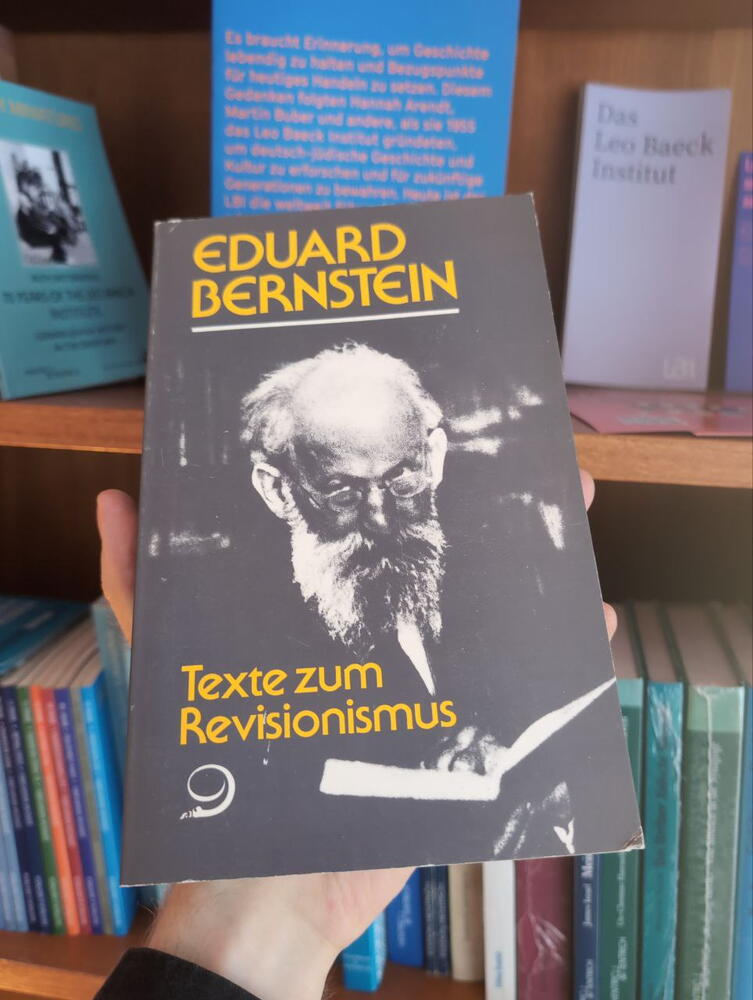
Bernstein held Rosa Luxemburg in high esteem. In his 1921 work The German Revolution of 1918–19, he portrayed her respectfully, despite her earlier scornful critiques of him. He wrote that Luxemburg “fell as a selfless fighter for an idea to which she had devoted her whole being.” While he believed she misjudged the revolutionary potential of her time, he recognised her brilliance. Even those who opposed her, he insisted, must honour her memory as a tireless fighter.
How influential was Bernstein within the SPD and later the USPD?
Bernstein was not a leader by temperament and never sought formal leadership. He viewed himself as a party publicist, a theorist in the service of practical politics. Until the late 1890s, he worked closely with Karl Kautsky, but after 1899 he occupied a more marginal position. He opposed those who clung to the early Marx and Engels and felt that Engels’s later thought had moved closer to his own. Within the USPD, the SPD offshoot founded during the First World War, Bernstein was again more of a thinker than an organiser. After the war, he clashed with the SPD leadership over his view that Germany, particularly the Kaiser and the military, bore primary responsibility for the conflict, a view unpopular within the party. Austrian Chancellor Bruno Kreisky later described Bernstein as “the true political reformer, not Marx.”
How did Bernstein position himself regarding Jewish assimilation and Zionism?
Throughout his life, Bernstein wrestled with his Jewish identity. After a Reform Jewish upbringing and confirmation in Berlin, he formally left the Jewish religious community around 1878, during an anti-church campaign by his socialist friend Johannes Most against court chaplain Adolf Stoecker. Nevertheless, Bernstein consistently spoke out against antisemitism, including that found within parts of the Social Democratic movement. He condemned the persecution of Romanian Jews and during the First World War wrote The Tasks of the Jews in the World War, emphasising the historic mediating role of Jews as traders and scholars.
By the mid-1920s, Bernstein showed growing sympathy for socialist Zionism, defending it even in a 1929/30 debate with Karl Kautsky. He believed the movement’s purpose was not to displace Arabs or other inhabitants of Palestine, but to establish a secure home for Jews. He explicitly rejected any claim to Palestine based on divine or historical entitlement. In 1913, he told the Reichstag: “First, I am a human being, then a German, and only then of Jewish descent, yet I gladly accept this heritage as an honourable part of who I am.”
This interview is part of the series Civil Engagement and Democracy in German History: Jewish Experiences and Perspectives published by the Leo Baeck Institute. You can read the article in the original German here: https://fuf-leobaeck.de/2025/10/eduard-bernstein-demokratischer-soziali…