On 7 July 1860, Gustav Mahler was born in Kalischt, Bohemia, into a Jewish family. He went on to become one of the greatest composers and conductors in the history of Western music, a figure whose nine completed symphonies pushed the Romantic tradition to its outer limits.
Yet Mahler spent much of his life navigating the deep tensions of German-Jewish identity. In 1897, he converted to Catholicism, in large part to secure the directorship of the Vienna Court Opera. It was a compromise that haunted him. Even after his conversion, antisemitic critics dismissed his music as rootless and un-German. His own late works, above all Das Lied von der Erde and the unfinished Tenth Symphony, carry a profound sense of longing and of not quite belonging.
His experience reflects one of the central questions of LBI London’s work: what did it mean to be Jewish in German-speaking Europe, and what was the true cost of assimilation?
The LBI London library collection, now at Senate House Library in Bloomsbury, includes The Music of the Jews: An Historical Appreciation by Aron Marko Rothmüller, which places Mahler and his contemporaries in the wider story of Jewish musical life.
Find out more: https://www.lbilondon.ac.uk/library
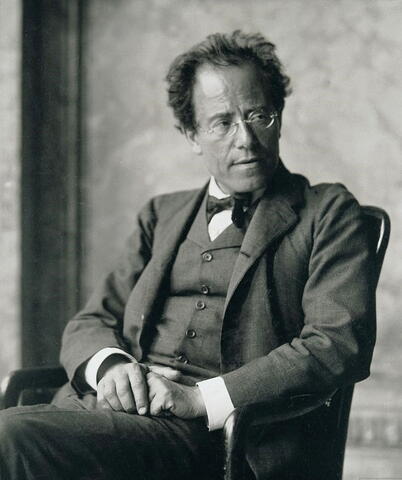
Image: Gustav Mahler, photographed in 1907 by Moritz Nähr.