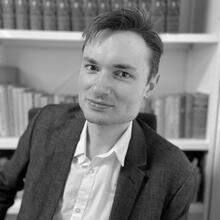
Dr Joseph Cronin specialises in research into Jewish life in Germany after the Holocaust. After graduating with a BA and MA from Durham University, Joseph conducted his PhD at the University of London between 2012 and 2016 with a LBI studentship in Modern Jewish History. During that time, he was fortunate to meet many of the institute’s former directors and chairpersons,…
People
Staff
Postdoctoral Research Fellow
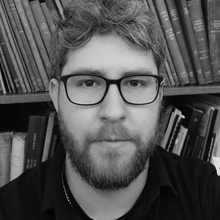
Alexander D. Brown is a historian of twentieth-century Europe specialising in the German Democratic Republic, antifascism, Holocaust memory, and Jewish political life under socialism. He is the author of Paul Merker, the GDR, and the Politics of Memory: “Purging Cosmopolitanism”? (Palgrave Macmillan, 2024), which examines the ideological uses of antifascism, antisemitism, and…
Development Manager
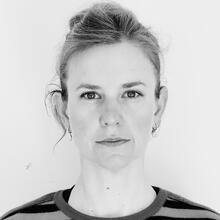
Dr Alice Riegler holds a BA in History from the University of Florence and an MA in European History and PhD in History from University College London. Her main research interest, which was also the topic of her PhD, is 20th century German history. Through this, she has increasingly become engaged in Jewish-German history research projects, transcribing documents from German script and…
Board & Governance
Chair of the LBI London
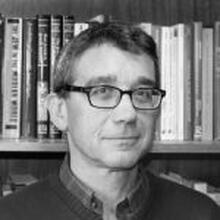
Prof. David Rechter is Professor of Modern Jewish History at the University of Oxford, affiliated with the Faculty of Asian and Middle Eastern Studies and Brasenose College. His research centres on the history of Jews in the Habsburg Monarchy, particularly Austrian Bukovina and Vienna during the First World War. Key publications include Becoming Habsburg: The Jews of Austrian Bukovina 1774…
Executive Board
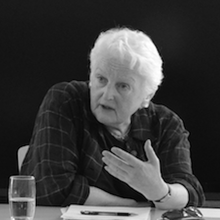
Rabbi Julia Neuberger has played a significant role in British Judaism, highlighting the evolving relationship between Jewish and German identities in the post-Holocaust period. Ordained in 1977 as the second woman rabbi in Britain, she has contributed to the development of progressive Judaism through her work on inclusion and social justice. Ennobled as a baroness and serving previously as…
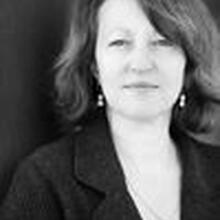
Prof. Dr. Stefanie Schüler-Springorum is Director of the Center for Research on Antisemitism at the Technical University of Berlin (on sabbatical). She also serves as spokesperson for the Selma Stern Centre for Jewish Studies Berlin-Brandenburg.
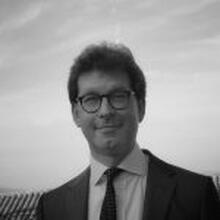
Dr Simon Adler is Visiting Researcher at the Institute for Habsburg and Balkan Studies of the Austrian Academy of Sciences. His research focuses on political economy, intellectual history, and economic thought in the Habsburg Monarchy from 1750 to 1918.
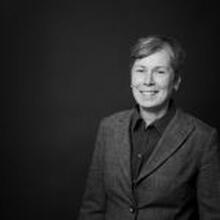
Professor Cathy Gelbin, Professor of Film and German Studies at the University of Manchester, is a film historian and cultural studies scholar whose work examines European life and its Jewish cultures. Her research spans feature film, video testimony, literary texts and live art, with a focus on Holocaust representation and the development of modern German-speaking Jewish culture. Recent…
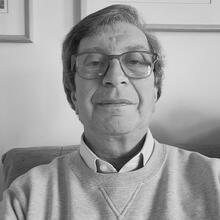
Board
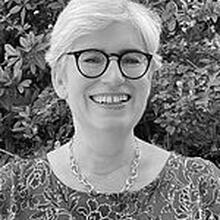
Prof Marion Aptroot is Professor of Yiddish Language and Literature at the Heinrich Heine University Düsseldorf. A leading expert in Yiddish studies, her research focuses on the development of Yiddish language, literature, and culture from the early modern period to the 20th century. Aptroot has published extensively on Yiddish manuscripts, Old Yiddish literature, and the history of Ashkenazi…
Board
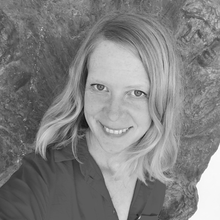
Dr Svenja Bethke is Associate Professor in Modern European History at the University of Leicester and Director of the Stanley Burton Centre for Holocaust and Genocide Studies. Her research explores European and Jewish history in the twentieth century, with a particular focus on material culture, nation building and everyday life.
She studied History, Political Science, Law and…
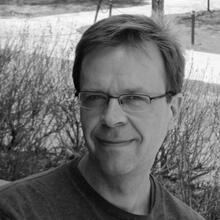
Prof. Tobias Brinkmann is Malvin and Lea Bank Professor of Jewish Studies and History at Pennsylvania State University. Social historian of modern Jewish history after 1800, focusing on migration processes in comparative and transnational frameworks, especially Jewish life in modern cities.
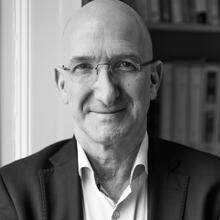
Professor David Feldman is Director of the Birkbeck Institute for the Study of Antisemitism and Professor of History at Birkbeck, University of London. He joined Birkbeck in 1994 after holding lectureships at Christ’s College, Cambridge, and the University of Bristol. His research focuses on the history of antisemitism, Jewish life, racialisation and migration in modern Britain.
…
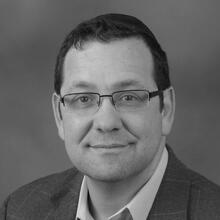
Prof. Paul Franks is Professor of Philosophy and Judaism in Antiquity at Yale University. Specializes in Kant, German Idealism, Jewish Philosophy, metaphysics, epistemology, and the philosophy of the human sciences.
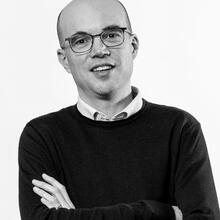
Prof. Tim Grady is Professor of Modern European History at the University of Chester. He specialises in twentieth-century British and German history, including the First World War, German-Jewish experiences, and interwar fascism.
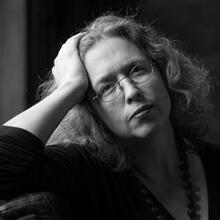
Prof. Abigail Green is Professor of Modern European and Jewish History at the University of Oxford. She specialises in nineteenth-century European history, modern Jewish history, nationalism, philanthropy, and transnational religious movements.
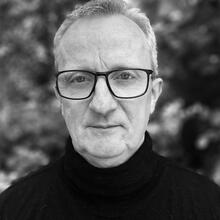
Prof. Neil Gregor is Professor of Modern German History at the University of Southampton. He specialises in art music in twentieth-century Germany, cultural histories of modern Germany, the Third Reich and Nazism, and minorities in German history.
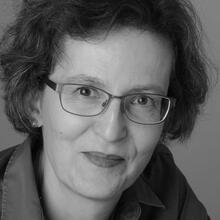
Prof. Christina von Hodenberg is Director of the German Historical Institute London and Professor of European History at Queen Mary University of London. She specialises in political culture, popular protest, media history, gender regimes, and generations in modern Germany and Britain.
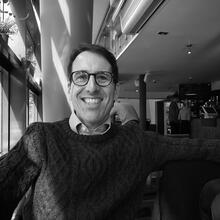
Prof. Anthony Kauders is Professor Emeritus of Modern History at Keele University. He specialises in German-Jewish history, antisemitism, and the history of psychology including psychoanalysis, social psychology, and hypnosis.
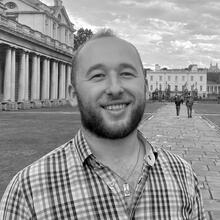
Charlie Knight holds a PhD from the Parkes Institute for the Study of Jewish/non-Jewish Relations at the University of Southampton where he remains an Honorary Fellow. He is currently a Visiting Research Fellow at the Institute of Languages, Cultures, and Societies at the School of Advanced Study, University of London, and at the Centre for German-Jewish Studies at the Weidenfeld Institute,…
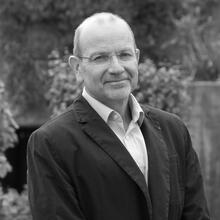
Prof. Dr. Rainer Liedtke is Professor of European History of the 19th and 20th Centuries at the Universität Regensburg, specialising in comparative European, urban, Jewish, British history and the history of modern Greece.
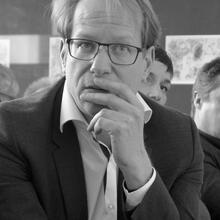
Till van Rahden is a Full Professor of German and European Studies at the Université de Montréal where he held a Canada Research Chair from 2006 to 2016. He is also a Research Professor at Carleton University and a non-resident Senior Fellow at the Forschungskolleg Humanwissenschaften in Bad Homburg. In 2023, he was a Mercator-Fellow at the Collaborative Research Centre/SFB 1482 “Studies in…
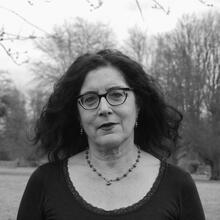
Prof. Miri Rubin is a historian of medieval Europe whose research explores the religious cultures of 1100-1600, with focuses on community life, charity, and the Eucharist. Her work examines Jewish-Christian relations, gender, identity, and urban attitudes to strangers through interdisciplinary approaches.
Board
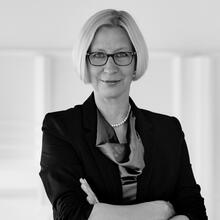
I work on the histories of National Socialism and the Holocaust, especially the role of ‘ordinary’ people in perpetrator societies, the role of visual culture in the spreading nad ‘naturalisation’ of Nazi ideologies, and on the way these histories shaped Jewish experiences and migrations.
Generally, my work explores the relationship between politics and visual culture in modern…
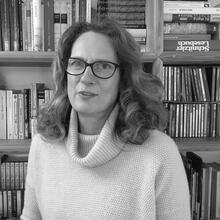
Professor Godela Weiss-Sussex’s main research interests lie in the culture and literature of the twentieth and twenty-first centuries in the following areas: women’s writing, the works of German-Jewish writers produced in Germany and in exile; multi- and translingualism; concepts of ‘Heimat’ and belonging. Her main current research projects focus on: German-Jewish women’s writing in the 20th…
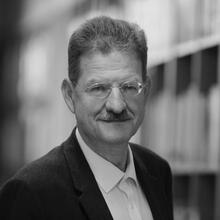
Prof. Christian Wiese is Martin Buber Professor of Jewish Thought and Philosophy at Goethe University Frankfurt and Visiting Research Professor at the Centre for German-Jewish Studies, University of Sussex. His research focuses on modern Jewish history and philosophy.
Former Staff / Historical Figures
Former Directors
Former Director, Year Book Editor (-2022)
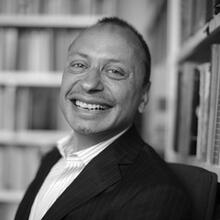
Books
Der veränderbare Körper. Jüdische Turner, Männlichkeit und das Wiedergewinnen von Geschichte in Deutschland um 1900 , Tübingen 2009.
Jüdische Identität und Nation. Fallbeispiele aus Mitteleuropa(link is external) , Köln, Weimar, Wien: Böhlau Verlag 2006 (co-author with Peter Haber and Erik Petry).
Arisierungen in Österreich und ihre Bezüge zur…
Director (2001-2015), Year Book Editor (2003-2014)
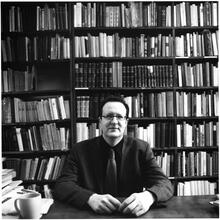
Director of the Leo Baeck Institute from May 2001 to April 2015. Former co-editor of the Leo Baeck Institute Year Book.
Books
November 1938. Die Katastrophe vor der Katastrophe, Frankfurt am Main: C. H. Beck 2013.
Anständig geblieben. Nationalsozialistische Moral (2nd ed.), Frankfurt am Main: S. Fischer Verlag…
Director (1959 - 2001), Year Book Editor (1970 - 1992)
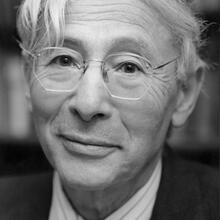
Dr Arnold Paucker, OBE, born in Berlin in 1921, was Director of the Leo Baeck Institute London from 1959 - 2001, and editor of the Leo Baeck Institute Year Book from 1978 - 1992.
His many years of dedicated service have profoundly shaped the Institute and its Year Book and he will be deeply missed.
Founder Editor (1956-1978)
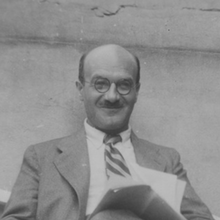
Prof. Robert Weltsch (1891–1982) was a Czech-German journalist, editor of the Jüdische Rundschau (1919–1938) in Berlin, and a leading voice for Jewish dignity amid Nazi persecution. As first Director of the Leo Baeck Institute London (1945–1964) and Founder Editor of its Year Book(1956–1978), he built its library and pamphlet collection, establishing a cornerstone for German-…
Former Chairs
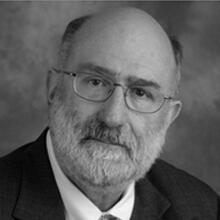
Sander L. Gilman is distinguished professor of the Liberal Arts and Sciences at Emory University. For 2004-5 he is the Weidenfeld Visiting Professor of European Comparative Literature at Oxford University. A cultural and literary historian, he is the author or editor of over seventy books. His first biography Jurek Becker - A Life in Five Worlds appeared in 2003 and his widely reviewed…
Former Chair
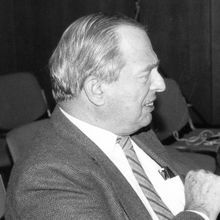
Prof. Werner E. Mosse (1918–2001) was a German-born British historian and founding father of the University of East Anglia, where he served as Professor of European History. Former Chair of the Leo Baeck Institute London, he specialised in German-Jewish economic and social history, editing key volumes such as Jews in the German Economy and co-editing works on 1848 revolutions and…
Former Chair
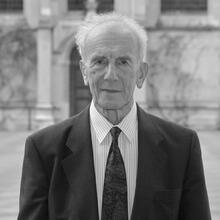
Prof. Peter Pulzer (1929–2023) was born in Vienna. In the aftermath of the November pogroms, he fled Nazi persecution with his family in 1939 and settled in the UK. As Gladstone Professor Emeritus of Government at the University of Oxford and Emeritus Fellow of All Souls College, he was a pioneering scholar of antisemitism. He was closely involved with the Leo Baeck Institute London, serving…
Founders
Founder
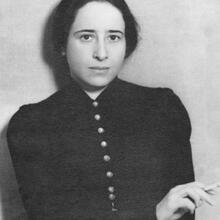
Hannah Arendt was a political theorist and philosopher whose work explored totalitarianism, authority, and the conditions of modernity. Her scholarship profoundly shaped twentieth-century political and social thought.
Founder
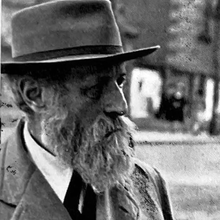
Martin Buber (1878–1965) was an Austrian-born Israeli philosopher best known for his existential philosophy of dialogue, particularly in I and Thou (1923), which emphasises the I-Thou relationship as foundational to human existence and ethics. He advocated for Jewish-Arab reconciliation through cultural renewal and was a leading voice in twentieth-century Jewish thought.
Founder
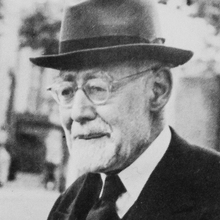
Rabbi Prof. Leo Baeck (1873–1956) was one of the most important German-Jewish thinkers and leaders of the twentieth century, whose life exemplified moral and intellectual leadership amid persecution. The Leo Baeck Institute, founded in 1955 to preserve the history and culture of German-speaking Jewry from the seventeenth century to the present, was named in his honour as the last public…
Founder
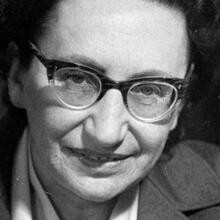
Dr Eva Reichmann was a pioneering German historian and sociologist, renowned for her analysis of antisemitism and the social causes of the Jewish catastrophe in Germany. From 1945 to 1959, she served as Director of Research at the Wiener Library, collecting over 1,300 survivor testimonies.
Founder
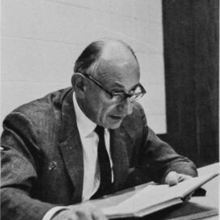
Gershom Scholem (1897–1982), born Gerhard Scholem in Berlin, was a German-Israeli philosopher and historian widely regarded as the founder of modern academic study of Jewish mysticism and Kabbalah. Rejecting his assimilated family’s secularism, he pioneered scholarly research into Kabbalah, emigrating to Palestine in 1923 and joining the Hebrew University of Jerusalem faculty. A founder…
Founder
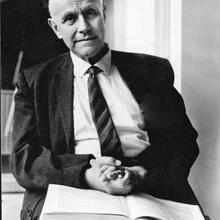
Prof. Ernst Akiva Simon was a German-born Israeli philosopher, educator, and religious thinker. He co-founded Brit Shalom for Jewish-Arab understanding and was a key figure in the Leo Baeck Institute, influencing Jewish education and interfaith dialogue.
Image: Wikipedia
Former Leo Baeck Yearbook Editors
Former Director, Year Book Editor (-2022)
Books
Der veränderbare Körper. Jüdische Turner, Männlichkeit und das Wiedergewinnen von Geschichte in Deutschland um 1900 , Tübingen 2009.
Jüdische Identität und Nation. Fallbeispiele aus Mitteleuropa(link is external) , Köln, Weimar, Wien: Böhlau Verlag 2006 (co-author with Peter Haber and Erik Petry).
Arisierungen in Österreich und ihre Bezüge zur…
Director (2001-2015), Year Book Editor (2003-2014)
Director of the Leo Baeck Institute from May 2001 to April 2015. Former co-editor of the Leo Baeck Institute Year Book.
Books
November 1938. Die Katastrophe vor der Katastrophe, Frankfurt am Main: C. H. Beck 2013.
Anständig geblieben. Nationalsozialistische Moral (2nd ed.), Frankfurt am Main: S. Fischer Verlag…
Editor Emeritus (1993-2010)
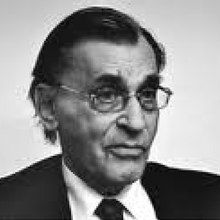
Prof. John A. S. Grenville (1928-2011), born Hans Guhrauer in Berlin, arrived in Britain via Kindertransport in 1939 and later changed his name upon naturalisation. Professor Emeritus of Modern History at the University of Birmingham, he specialised in diplomatic history, European international relations, and German-Jewish history, serving as longtime editor of the Leo Baeck Institute Year…
Director (1959 - 2001), Year Book Editor (1970 - 1992)
Dr Arnold Paucker, OBE, born in Berlin in 1921, was Director of the Leo Baeck Institute London from 1959 - 2001, and editor of the Leo Baeck Institute Year Book from 1978 - 1992.
His many years of dedicated service have profoundly shaped the Institute and its Year Book and he will be deeply missed.
Founder Editor (1956-1978)
Prof. Robert Weltsch (1891–1982) was a Czech-German journalist, editor of the Jüdische Rundschau (1919–1938) in Berlin, and a leading voice for Jewish dignity amid Nazi persecution. As first Director of the Leo Baeck Institute London (1945–1964) and Founder Editor of its Year Book(1956–1978), he built its library and pamphlet collection, establishing a cornerstone for German-…
Former research associates

Prof Ulrich Charpa, Research Professor at LBI London, Professor of Philosophy and Member of the Research School at Ruhr University, Bochum.
Previously he taught Philosophy, History of Science and Jewish Thought side by side at various universities. Today he is also affiliated to the Jacques Loeb Center for History and Philosophy of the Life Sciences at Ben Gurion University,…

Ute Deichmann is Research professor at LBI and Adjunct Full Professor at the Department of Philosophy at Ben Gurion University. She is the director of the Jacques Loeb Centre for the History and Philosophy of the Life Sciences at this university. Her work has focused on the biological and chemical sciences in the 19th and 20th centuries, where she has reviewed the history of experiments…

Birgit R. Erdle, Dr phil, germanist, taught at the University of Munich, the Academy of Arts in Munich, the University of Zurich and the Technical University Berlin. Various publications on German-Jewish cultural history, the legacy of National Socialism and the Shoah, and on the history of literary figures central to the construction of cultural memory since 1800.
…

Tanja Hetzer, MA, historian, studied in Zurich and Bielefeld. She worked as a research assistant for the “Independent Experts’ Commission: Switzerland – Second World War” in Berne (1997–1999) and for the “Independent Historical Commission for the Investigation of the Activities of Bertelsmann Publishers During the Third Reich” in Munich (1999-2002). Currently she is a PhD Candidate at the…
Christian Strub, PD Dr phil, philosopher, taught at the universities of Freiburg and Hildesheim, now teacher at a secondary school in Berlin. After various publications on metaphorology (Kalkulierte Absurditäten. Versuch einer historisch reflektierten sprachanalytischen Metaphorologie, Freiburg i. Br.: Alber 1991), early scholasticism and the concept of the philosophical system, he worked on…

Anthony S. Travis is senior research fellow at the LBI and deputy director of the Sidney M. Edelstein Center for the History and Philosophy of Science, Technology and Medicine at the Hebrew University of Jerusalem. He has published extensively on the history of chemical technology in the 19th and 20th centuries. Currently he is undertaking research into the scientific work of the British…
Postdoctoral Research Fellow

Dr Monja Stahlberger is an early career researcher specialising in German and Austrian exile studies and German-Jewish history. Her work focuses on questions of cultural identity, belonging, and transnational memory. She is particularly interested in how personal narratives and ego-documents illuminate processes of identity formation and cultural belonging across generations.
…Editorial
Editorial Board: German Jewish Cultures
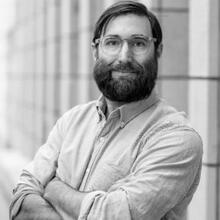
University of Pennsylvania
Professor Matthew Handelman is Assistant Professor of German and a member of the Core Faculty in the Digital Humanities Specialization at MSU. His research interests include German-Jewish literature and philosophy in the early twentieth century, the intersections of science, mathematics and culture in German-speaking countries, as well as the digital…

Tel Aviv University
Blessed is the Changer of Beings: Uses and Representations of Exoticism in the Jewish Enlightenment
The dissertation explores Jewish representations of otherness during a formative period in the history of racial thought. Drawing on a wide range of sources, including philosophical and scientific works, halakhic literature, and…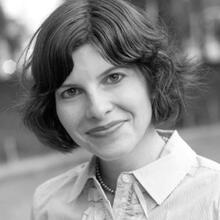
University of Pennsylvania
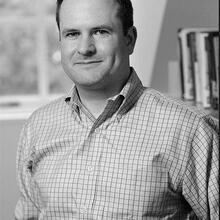
Observable Type: Jewish Women and the Jewish Press in Weimar Germany
Through an examination of German and Yiddish-language Jewish periodicals in Weimar Germany (1919-1933), this dissertation investigates the problematics of Jewish visibility, and the ways women approached modernity and embodied markers of Jewish and gender difference…
Columbia University
The Museum of the Jews: Literature and Ethnography in Germany and Eastern Europe
This dissertation attempts to reconstruct the history of Jewish ethnography and folklore studies in Germany, in order to locate Jewish anthropology within the broader historiography of anthropology, and also to uncover the links between the discipline in…
New York University
Between Court Jew and Jewish Court: David Oppenheim,
the Prague rabbinate, and eighteenth-century Jewish politics
Joshua Teplitsky is the Joseph Meyerhoff Associate Professor of Modern Jewish History. He studies the history of Jewish life in early modern Central Europe, with an eye both to the particularities of Jewish experience and the…
Editorial Board: Schriftenreihe
University of Heidelberg
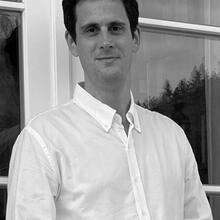
Jews, Music, and Society. A Study in the Social and Cultural History of Music (1750–1900)
My dissertation is an attempt to offer a fuller understanding and, to some extent, a reinterpretation of modern Jewish history through the lens of music history. By studying the practice and notion of music among Jews in Central Europe, especially…
Prof. Dr. Stefanie Schüler-Springorum is Director of the Center for Research on Antisemitism at the Technical University of Berlin (on sabbatical). She also serves as spokesperson for the Selma Stern Centre for Jewish Studies Berlin-Brandenburg.
Sander L. Gilman is distinguished professor of the Liberal Arts and Sciences at Emory University. For 2004-5 he is the Weidenfeld Visiting Professor of European Comparative Literature at Oxford University. A cultural and literary historian, he is the author or editor of over seventy books. His first biography Jurek Becker - A Life in Five Worlds appeared in 2003 and his widely reviewed…
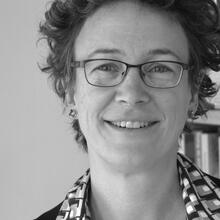
Miriam Ruerup is a historian of modern German-Jewish history. She works on the history of statelessness from a Jewish perspective. Since 2020 she has been director of the Moses Mendelssohn Center for European-Jewish Studies in Potsdam and teaches as a full professor of history and European Jewish studies at the University of Potsdam which is part of the Selma Stern Center for Jewish Studies…
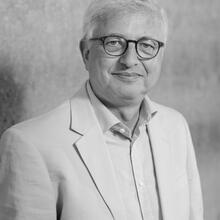
Michael Brenner is the Seymour and Lillian Abensohn Chair in Israel Studies and Director of AU’s Center for Israel Studies. He received his PhD at Columbia University and taught previously at Indiana and Brandeis Universities. Since 1997 he has been Professor of Jewish History and Culture at the Ludwig-Maximilians University of Munich. He had visiting appointments at numerous universities,…
Astrid Deuber-Mankowsky is Professor em. of Media Studies and Gender Studies at Ruhr-Universität Bochum. She studied philosophy and German literature at University of Zurich and Freie Universität zu Berlin. Before joining Ruhr-Universität Bochum, she taught at the Institut für Kulturwissenschaft at Humboldt-Universität Berlin from 1996 to 2004. She is co-founder and was editor of the journal…
Director (2001-2015), Year Book Editor (2003-2014)
Director of the Leo Baeck Institute from May 2001 to April 2015. Former co-editor of the Leo Baeck Institute Year Book.
Books
November 1938. Die Katastrophe vor der Katastrophe, Frankfurt am Main: C. H. Beck 2013.
Anständig geblieben. Nationalsozialistische Moral (2nd ed.), Frankfurt am Main: S. Fischer Verlag…
Latest Publications