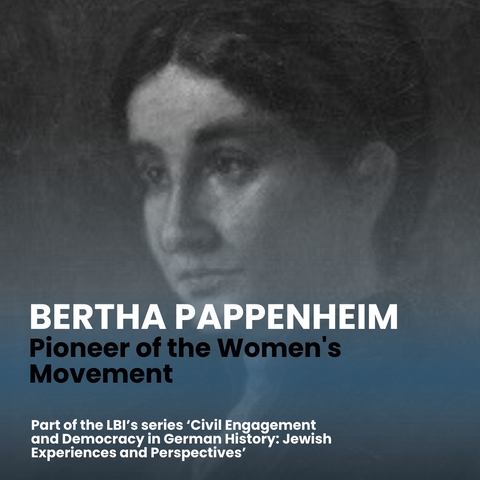
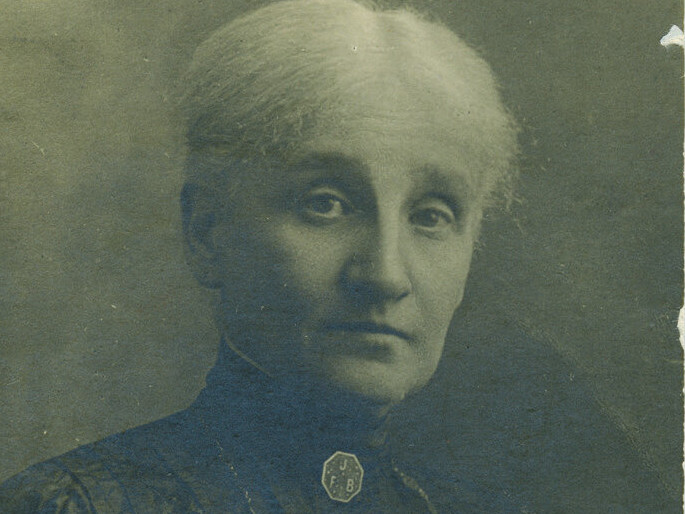
Bertha Pappenheim (1859-1936) was one of the most prominent Austrian-Jewish women’s rights activists and social reformers of the early twentieth century. As a young woman, in Austria, she was a patient of Josef Breuer and Sigmund Freud, referred to as ‘Anna O.’ in their studies on hysteria, but went far beyond that role: as founder of the Jüdischer Frauenbund (Jewish Women’s Association), organiser of numerous social projects, and an international campaigner against the trafficking of girls, she helped to shape modern social work in Germany, to where she moved after her illness, in decisive ways. Her advocacy linked the concerns of the women’s movement with the specific needs of Jewish women, making her a key figure at the intersection of feminism, Judaism, and welfare.
Dr Elizabeth Loentz, Professor of Germanic Studies at the University of Illinois at Chicago, specialises in German-Jewish literary and cultural history, the Yiddish language, gender studies, and memory culture. She is particularly known for her research on Bertha Pappenheim and on the role of Jewish women in the German women’s movement.
Lutz Vössing spoke with Elizabeth Loentz about the women’s rights icon Bertha Pappenheim.
Bertha Pappenheim is undoubtedly one of the most impressive figures of the late nineteenth and early twentieth centuries. What drew you personally to study her?
My path to Bertha Pappenheim was a detour. In the early 1990s, I taught German at Haus Chevalier, a ‘clearing centre’ for unaccompanied minor refugees near Munich. At that time, Haus Chevalier was a pilot project and the first facility of its kind in Germany. The country was unprepared to care adequately for the growing number of such refugees. Many of the children I taught - aged between 12 and 17, from places such as Kosovo, Somalia, Afghanistan, or China - reminded me of the orphans, refugees, and unmarried mothers for whom Pappenheim had fought. Later, during my doctoral studies in the United States, I encountered Pappenheim in a seminar on German-Jewish women writers and felt drawn to this author and activist who had dedicated her life to the very work I had left behind when I entered academia.
 From what kind of family did she come, and how did that shape her?
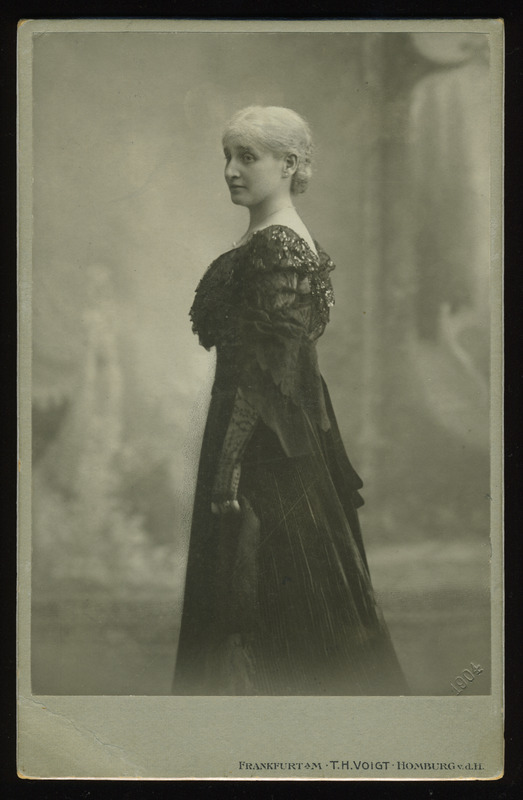
Pappenheim grew up in a wealthy Jewish family that combined orthodox religion with secular education and culture. Her father, Siegmund Pappenheim, was a merchant from Pressburg (today Bratislava), and her mother, Recha Goldschmidt Pappenheim, came from a respected Frankfurt family. As was typical for girls of her class, she attended a Catholic girls’ school until the age of fifteen, but was denied the higher education her brother enjoyed. Throughout her life she lamented this lack of formal education, which motivated her later work in women’s education.
What did her move from Vienna to Frankfurt mean for her?
After recovering from the psychological illness later publicised as the ‘Anna O.’ case, her 1888 move to Frankfurt marked a new beginning and freedom for public engagement. By the mid‑1890s she had become a central figure in the Frankfurt women’s movement, co-founding local chapters of the Allgemeiner Deutscher Frauenverein (General German Women’s Association) and campaigning to improve women’s rights in the civil code. She also published her first works - a translation of Mary Wollstonecraft’s Vindication of the Rights of Woman, a play entitled Frauenrecht, and essays on social work, education, women’s rights, and women in Judaism.
How did she become involved in charitable work?
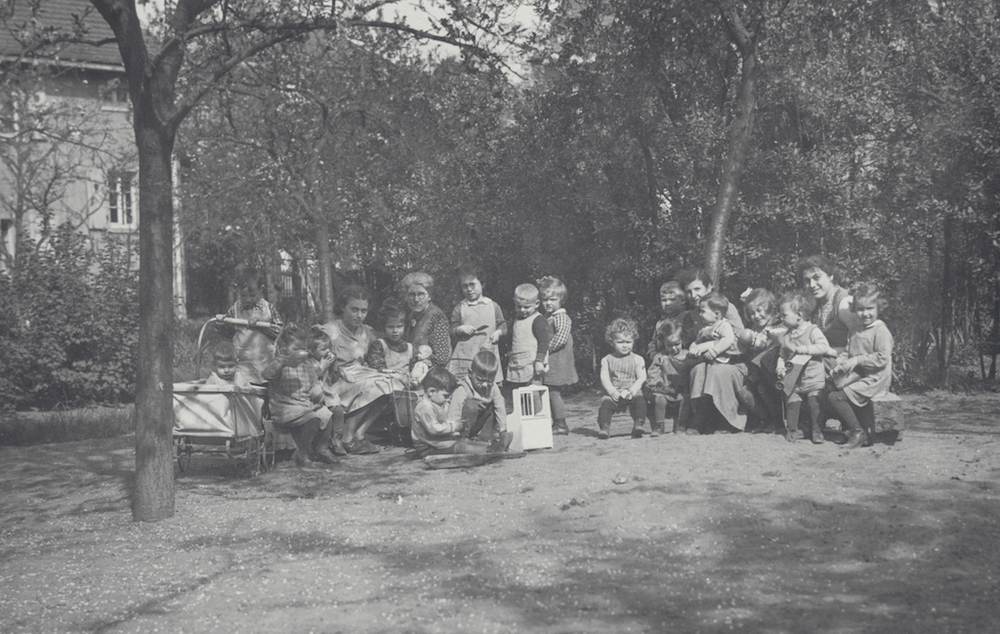
After 1888 she volunteered in Jewish community social projects: a soup kitchen for Eastern European immigrants, a free mending school for poor women, and later an orphanage for Jewish girls, where she served as matron and educator.
Did she also engage politically?
Although highly influential, Pappenheim rarely intervened directly in politics. She joined the 1896 ‘Frauenlandsturm’ campaign for women’s legal equality and later publicly opposed abortion reform. Initially sceptical of women’s suffrage, she later supported it - at least within Jewish communal life.
Her most sustained impact was civic.
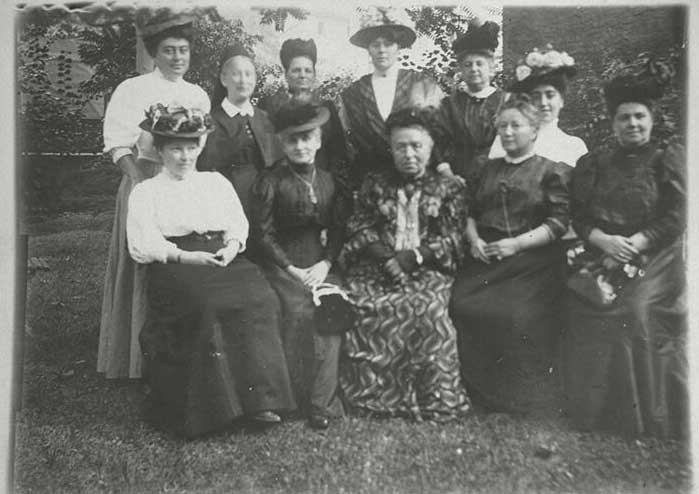
Exactly. In 1902 she founded the ‘Weibliche Fürsorge’ (Women’s Welfare Board) to coordinate social initiatives between the Jewish community, the city, and the women’s movement. Its work extended abroad, particularly to Galicia, providing training, childcare, legal aid, and assistance to women refugees.
One of her most important initiatives was the Jewish Women’s Association (Jüdischer Frauenbund, JFB), founded in 1904 with Sidonie Werner. Pappenheim served as its first chair, later joining the board of the Federation of German Women’s Associations. By the 1920s the JFB included 34 local branches, 430 affiliated societies, and some 50,000 members, and hosted the first International Congress of Jewish Women in 1914, which established the International Council of Jewish Women.
What was the aim of the JFB?
The JFB pursued the goals of the mainstream German women’s movement while addressing specifically Jewish issues - from welfare to education and women’s participation in the religious community. Its strength lay in uniting Jewish women across ideological lines - Orthodox, Reform, Zionist, or liberal - and making them visible within the broader feminist movement.
Beyond that, Pappenheim helped found the Central Welfare Office of German Jews in 1917 and was an early voice in the fight against human trafficking.
She often criticised women’s status in Jewish religious life. In speeches and aphorisms she challenged the subordination of women in scripture and communal structures, arguing that within Judaism women had ‘not even the rights of a thirteen-year-old boy.’ While she upheld motherhood as a central vocation, she demanded intellectual and spiritual recognition for women and called for an education reflecting female experience and responsibilities.
Why is she still relevant today?
Pappenheim can be seen as a forerunner of an intersectional women’s movement. She recognised that Jewish women experienced both sexism and antisemitism differently from others, and she built a movement that asserted this dual awareness. Her activism crossed national boundaries, linking German, Eastern European, and international efforts for women’s welfare.
Although much research has been done, gaps remain - particularly concerning the reception of her work in non-German media and her personal stance towards psychoanalysis. Exploring these would deepen our understanding of how her activism resonated beyond Germany, especially among the communities she sought to uplift.
This interview is part of the series Civil Engagement and Democracy in German History: Jewish Experiences and Perspectives published by the Leo Baeck Institute. You can read the original article in German here: https://fuf-leobaeck.de/2025/10/bertha-pappenheim-pionierin-der-frauenbewegung/