After the German November pogroms of 1938, the British government responded with the unprecedented admission of around 10,000 Jewish children as part of the Kindertransport, but there was little state support for adult refugees. This is where local initiatives came to the fore – church groups, welfare associations and aid committees provided accommodation in improvised homes and organised training programmes. Documents from the Hertfordshire Archives show how a joint effort by a group of Welwyn Garden City residents helped Jewish refugees to flee fascist Europe in the late 1930s and provide special insight into the history of one family from Czechoslovakia.
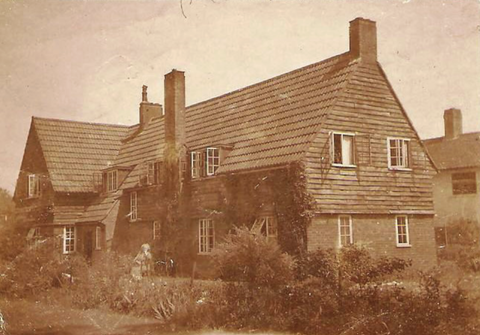
The idea for the Applecroft Refugee Hostel was devised by Edgar Reissner, a German student at King’s College London, Wim van Leer, a Dutch Jew who owned an engineering factory in the town, and Geoffrey Edwards, a Quaker. Captain Richard Reiss, one of Welwyn Garden City’s founding fathers and advocate of the new town movement, chaired the committee that was subsequently formed and arranged a house in Applecroft Road to be used as a hostel. Wim van Leer then undertook the perilous journey to Leipzig, armed with British visas and the resolve to bring young Jews to safety. After negotiations with the Gestapo, he returned in January 1939 with fourteen refugees – lives that would otherwise almost certainly have been lost in concentration camps. Donations, monthly subscriptions, gifts of furniture and equipment, as well as a grant from the Central Committee for Refugees made the running of the hostel possible.
After the first group of refugees arrived in Welwyn Garden City in January, others soon followed. On 17 March 1939 Elise Fuhrmann, of Brno in Czechoslovakia, addressed a letter in English to Captain Reiss. In her letter, Mrs Fuhrmann appealed to Reiss to rescue her two sons, Gerhard and Thomas, born in 1917 and 1919 respectively.
The document stated that Captain Reiss had offered her husband Heinrich Fuhrmann, the owner of two textile mills, to take his sons in, although it is not known where the two men had met:
Dear mister Reiss I don’t know you, only my husband has told me how kind you are and only a mother can ask you the great favour I do now. You offered my husband that my boys could stay with you in case of danger. The danger is here and please save my unhappy boys. (…) I am quite alone and helpless. Please get them out! they are very modest and would love to work but I know it is not allowed in England. But they would do everything. I don’t know, how the way is to be able to go to England. But you surely do know. Please answer me soon and pardon me but I am in terrible despair. Yours Elise Fuhrmann
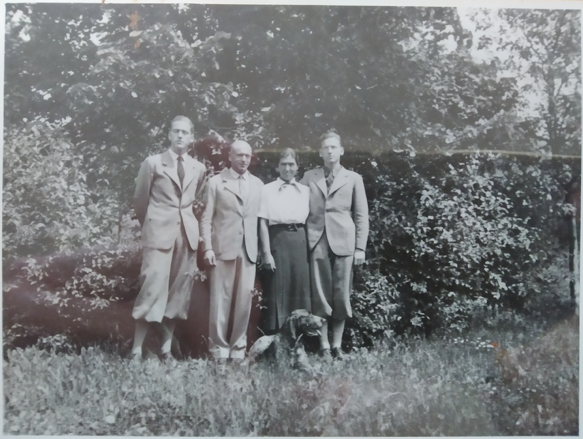
Reiss’s reply seems to have been one of reassurance and hope. For just over a week later, on 25 March 1939, Elise Fuhrmann wrote back to Reiss and his wife Celia, saying that their letter had restored her sense of hope after all the dark times and enclosing a “picture of happy days”. The archival file contains two photographs: one shows the entire family, and one is of Elise Fuhrmann, presumably flanked by her two sons.
Shortly afterwards, on 28 March 1939, in a typewritten letter addressed to Celia Reiss, Elise Fuhrmann thanked her for agreeing to take in her sons: “I thank you so much for your kindness. You cannot imagine what it means to us, that you will help us. God bless you!” She also provided more detail about them, noting that “both can drive a car,” “Thomas is very good in French, Latin and Greek and could teach it,” and “Gerhard is good in all technical things and he is the better driver.” Fear and relief, dread and profound gratitude, run through every line of her correspondence.
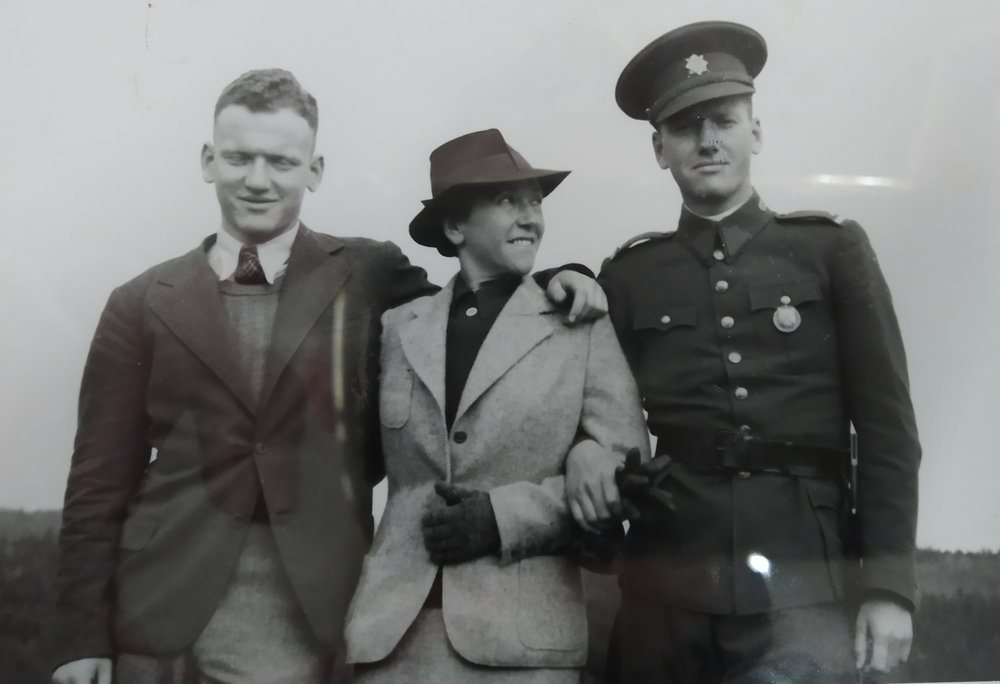
The precise details of Thomas and Gerhard Fuhrmann’s journey to Hertfordshire remain unknown. By the autumn of 1940, however, they had successfully settled in England. In a letter dated 1 November 1940, Elise Fuhrmann, who had since managed to leave Europe with her husband, wrote to Celia Reiss: “You say that our boys are well and that they are loved and that is all we wish.” She added: “We are most happy that they are now self-supporting and we know what a great help you have been to them,” highlighting that the hostel in Welwyn Garden City was more than just a roof over its residents’ heads, but offered a pathway to long-term independence instead.
At the time of Elisa Fuhrmann’s letter to Celia Reiss, the Applecroft Refugee Hostel had already closed. Its doors had been open from November 1938 to 31 December 1939, with the final accounts published in the Welwyn Times on 28 March 1940. This account stated that the hostel had housed around twenty-eight refugees at different times, most of them young men from Germany, Austria and Czechoslovakia aged between eighteen and thirty. Extracts from letters published in the newspaper reveal deep gratitude for the care and kindness they experienced: arriving from persecution, they found safety, friendship, and the chance for a new beginning. Some were reunited with family, and many rebuilt their lives with hope. After the horrors of Nazi Germany, the hostel was “like a heaven on earth”, as one of the letters stated.
At the end of WWII, in May 1945, Werner Leschziner, a Jewish refugee from Leipzig, contacted Richard Reiss to offer “profound thanks and gratitude” for saving him and his companions “from Concentration-camps and certain death.” He also listed the paths that his fellow refugees had since taken: two had re-emigrated to Australia and Brazil, five had joined the British Army, one the U.S. Army, others worked in munitions, farming, or accounting. Most had applied for naturalisation, hoping “for the honour to become citizens of the British Empire, loyally and for ever grateful.” The refugees who stayed in Welwyn Garden City established the city’s Jewish Congregation, which went on to build a synagogue that was inaugurated in 1956.
As regards the Fuhrmann family, it is known that Elise and Heinrich Fuhrmann succeeded in fleeing to Shanghai by way of the port of Trieste in 1940. To be able to leave Czechoslovakia, they were forced to hand over all their funds to the National Socialists. A substantial amount of money wasn’t recovered by the heirs from a Swiss bank account via the Claim Resolutions Tribunal until 2003. The couple remained in Shanghai for less than one year before immigrating to the United States, where they were reunited with their sons, presumably after the end of the war. The family changed their names to Forman and acquired US citizenship. Gerhard and Thomas both carried on the family tradition by working as engineers in the textile sector and passed away in 1966 and 2018 respectively.
The Applecroft Refugee Hostel and the impact of people like Captain Reiss demonstrate that rescue was not only about escape. It was about building futures, organising solidarity from scarce resources, and making space – however small – for human dignity. In the letters of people who benefitted from them, one can glimpse the profound truth of what such places meant: not simply shelter, but a bridge from despair into life, made possible by the joint effort of an entire community. At a time when local authorities in England are considering legal avenues to oppose the accommodation of asylum seekers in local hotels, while far-right groups seek to mobilise protest to force their closure, this is a perspective that is worth remembering.
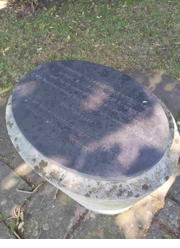
“This memorial was established with gratitude to Capt. R.L. Reiss, Edgar Reissner and the citizens of Welwyn Garden City by the fourteen young Jewish men who were rescued by Wim van Leer from German concentration camps after the Kristall Nacht in November 1938.”
Snapshot by Anna-Lena Kaufmann, edited by Alice Riegler.
Initial research by Jacob Neuwirth, thanks to Stephen Lopes-Dias of the Welvyn Garden City Hebrew Congregation for the information provided.
The Applecroft Hostel image courtesy of Together for Welwyn Garden City
Bibliography:
- Hertfordshire Archives and Local Studies, DE/X1053/X5/8: Correspondence, cuttings and photographs regarding refugees from Nazi Germany and Holocaust, and the Applecroft Refugee Hostel, mainly relating to the Fuhrmann family of Czechoslovakia.
- https://www.ourwelwyngardencity.org.uk/content/topics/wartime/wwii/jewish-refugees-come-to-welwyn-garden-city
- https://www.welwyngarden-heritage.org/gallery/25-general-stampers-ltd
- https://crt-ii.org/_awards/_apdfs/Fuhrmann_Heinrich.pdf