Between 1933 and 1940, Palestine took in some 60,000 Jewish refugees from Nazi-ruled countries, over half of whom were German Jews fleeing escalating persecution. This large wave of German immigrants, of ‘Yekkes’ as they became nicknamed in the Yishuv (the Jewish community of Palestine), became known by several names: The Fifth Aliyah, the German Aliyah, and the Aliyah Chadascha (The New Aliyah).
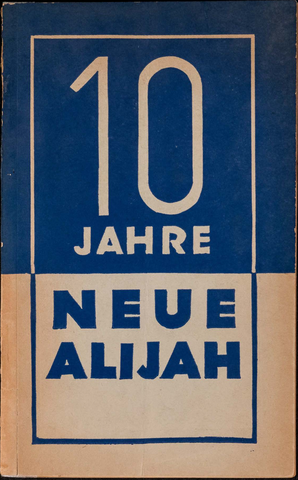
To mark the tenth anniversary of this wave of immigration, the pamphlet 10 Jahre Neue Alijah (Ten years of the New Aliyah) was published in 1943 by the nonpartisan political organisation Alija Chadascha. Formed by and primarily for German immigrants, the organisation sought to represent the economic and social interests of this growing community within the Yishuv. As Felix Rosenblüth, the chair of Alija Chadascha, writes in the pamphlet, Alija Chadascha was ‘eine fortschrittlich-zionistische Gruppe’ (‘a progressive-Zionist group’), that aimed to advance equal rights for German immigrants in daily life in ‘Erez Israel’ (73-74).
Alija Chadascha defined Zionism as ‘die Schaffung des Nationalheims für das jüdische Volk in Palästina unter politischen Bedingungen, die ein Leben in Freiheit gewährleisten’ (‘the creation of the Jewish people’s national home in Palestine under political conditions that guarantee a life of freedom’). By explicitly invoking Herzl’s vision – ‘Wir wollen endlich als freie Männer auf unserer eigenen Scholle leben und in unserer eigenen Heimat ruhig sterben’ (‘we want to live at last as free men on our own soil and to die peacefully in our own homeland’) (73-74) – Rosenblüth situates the group within the framework of Herzl’s political Zionism, emphasising national self-determination as a guiding principle.
For Alija Chadascha, Aliyah constituted a crucial task of Zionism, with the two being inextricably intertwined. Accordingly, the organisation aimed both to improve the lives of recent immigrants through greater representation and influence in the institutions of the Yishuv, and to encourage further immigration, particularly in light of the increasingly desperate situation of European Jews living under Nazi rule.
This broader purpose shapes 10 Jahre Neue Alijah. As the foreword (76) explains, the pamphlet aims to provide the reader with an understanding of the New Aliyah’s participation and successes in various parts of society: from politics, to culture, business, agriculture, sport, and theatre to name but a few. More than a record of immigrant success, the pamphlet also seeks to demonstrate the transformative impact that German Jews had made to Jewish life in Mandatory Palestine; a transformation that the organisation believed was for the better.
Particularly revealing are the sections entitled The Influence of the New Aliyah on the Urban Image and Lifestyle of Tel Aviv (47-50), and The New Aliyah in Retail (38-39). Together, these sections highlight how the new German immigrants’ consumerist sensibilities changed the shopping habits of the Yishuv and the visual appearance of Tel Aviv. The latter section states that ‘Der Anteil der Kreise der neuen Alijah an der Entwicklung des Einzelhandels ist schon für das Auge so auffällig, dass es keine Diskussion über seine Bedeutung geben kann’ (‘The contribution of the New Aliyah communities to the development of the retail sector is so visually obvious that there can be no debate about its significance’); while the former notes that innovations such as modern shop-window displays reshaped the city’s streetscape.
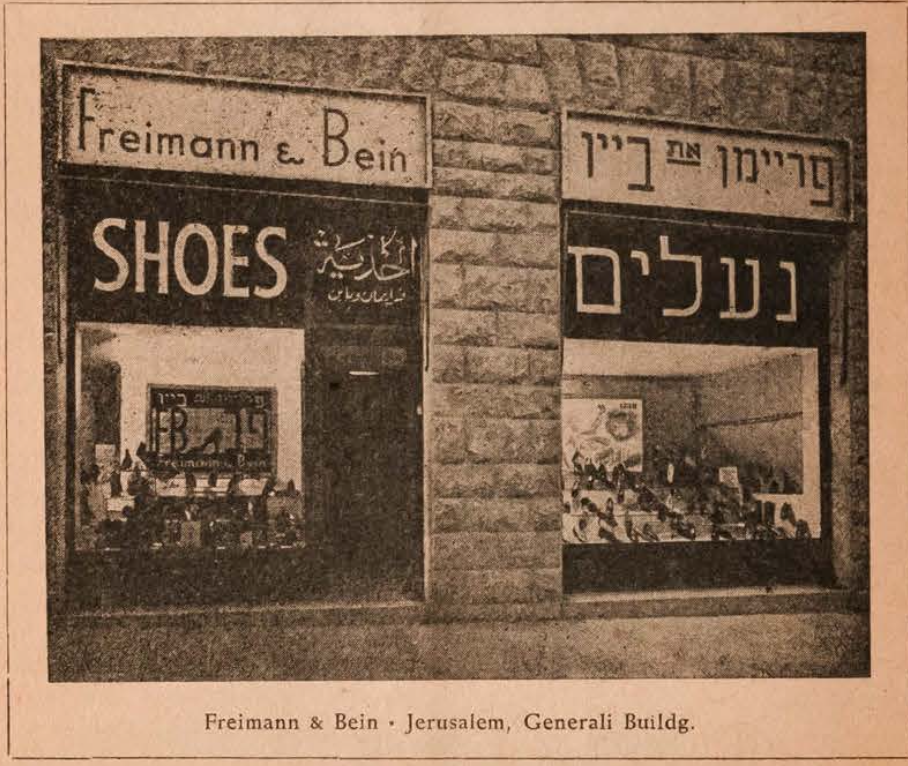
Yet it is the pamphlet’s visual material, rather than its written content, that most vividly portrays the influence of the New Aliyah in this sphere. The pamphlet is replete with advertisements in a mixture of German, Hebrew, and English, promoting everything from clothes, to coffee, insurance, furniture, holidays, and many other consumer goods. Collectively, these advertisements reflect the (consumer) society and commercial culture that the German immigrants had become accustomed to in Europe, while simultaneously revealing how these tastes and habits reshaped the social and cultural norms of the Yishuv in Palestine.
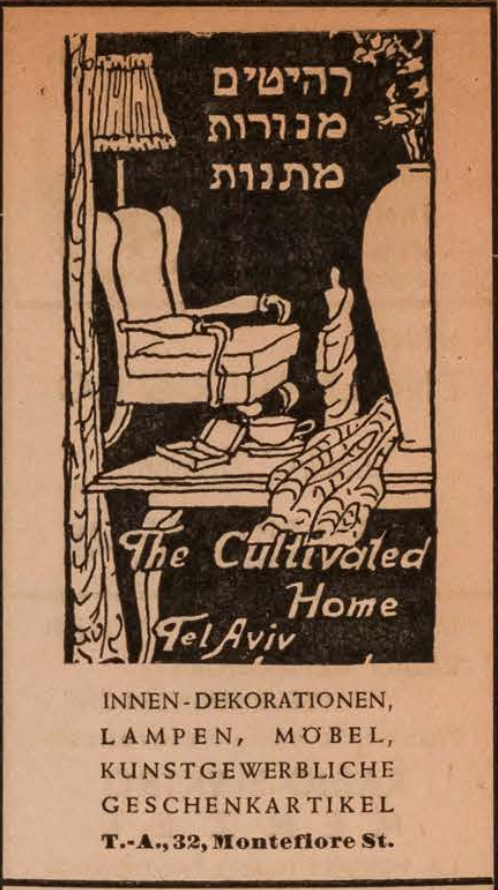
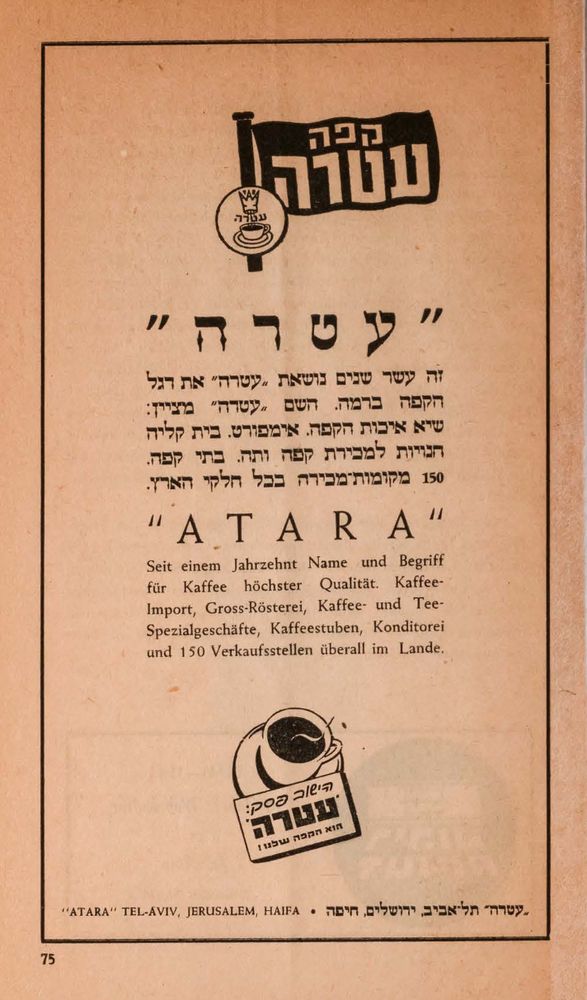
As Osnat Roth-Cohen and Yehiel Limor point out, local advertising was relatively ‘undeveloped’ in Palestine before the New Aliyah (126). While there had been some advertisements in early Jewish newspapers published in Palestine (the first of which went into print in 1863), they were not common. It was not until 1919 that Doar Hayom became the first newspaper to be principally funded by ads.
Many of the German immigrants of the New Aliyah, unlike some other immigrants, were not eager to assimilate and were often intent upon maintaining their culture: they continued to speak German in Palestine, published German newspapers, and organised German cultural events. They also tended to be more highly educated than other immigrants and often had more professional experience. Among these new German immigrants were advertising agents and graphic designers who established new advertising agencies in Palestine; the number of advertising agencies in Tel Aviv increased from approximately fifteen at the beginning of the 1930s to around twenty-five by the decade’s end (Roth-Cohen and Limor, 134).
These advertising agents and graphic designers had learnt their trade in the Weimar Republic, where advertising had become an unavoidable feature of everyday life. As Boaz Neumann notes, ‘A German citizen of the Weimar Republic cannot read the newspaper, listen to the radio, take the U-Bahn or go to the cinema without coming across an advertisement’ (17). Influenced heavily by the American advertising and consumerism of the 1920s, German advertising increasingly relied upon striking graphic design and visually enticing posters to attract consumers.
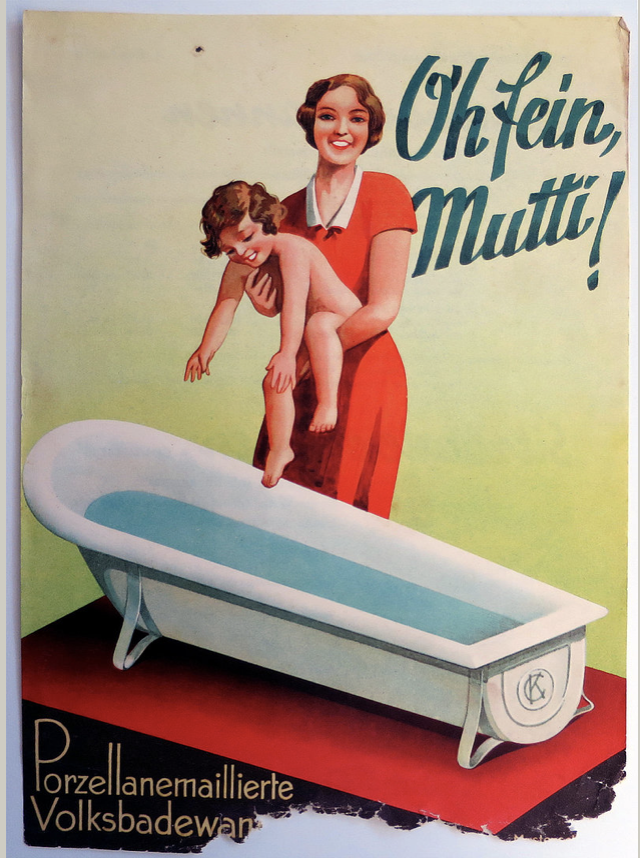
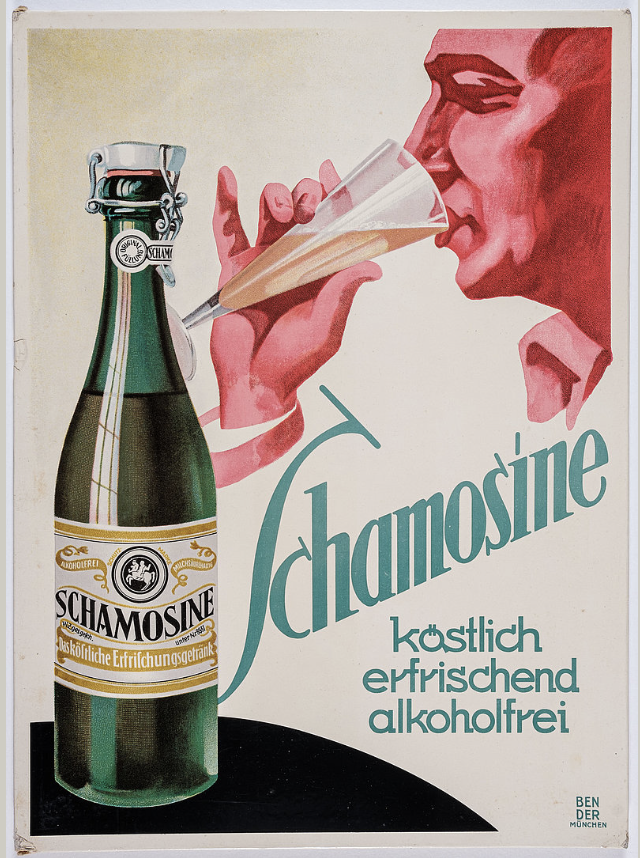
One need only turn to the German literature and film of the period, and chiefly that of the New Objectivity movement, to see the extent of the impact of this consumerist culture. Irmgard Keun’s 1932 novel The Artificial Silk Girl, for example, depicts a Berlin saturated by advertising and consumer desire. The novel’s young, lower-class protagonist Dora becomes so intoxicated by the plethora of ads and surging consumerism of the modern city that she turns to quasi-prostitution in her strive to attain the glamourous lifestyle advertised all around her.
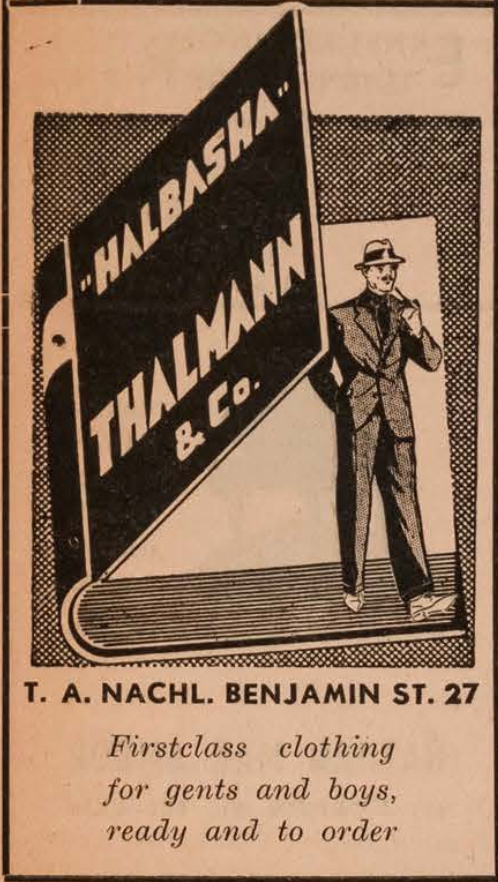
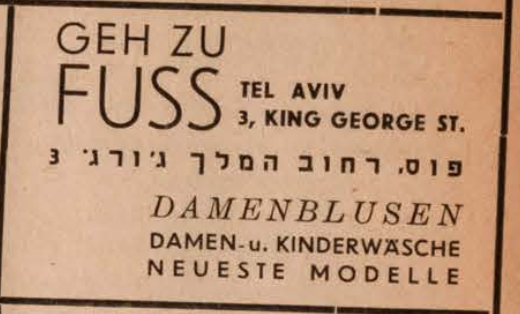
I am not suggesting that the style of advertisement imported to Palestine by the New Aliyah led to a quasi-prostitution of the Yishuv. However, it is clear that the imported bourgeois values and the comforts and luxuries of bourgeois Western European society did influence consumerist desires and aspirations in Palestine. Advertisements for a ‘cultivated home’, ‘first-class clothing for gents and boys’, ‘elegant lingerie’, and clothes of the ‘newest fashions’, such of the kind found in this pamphlet, promoted an ideal of modern European luxuries and respectability. In doing so, they imported not merely products to Mandatory Palestine, but also the values and aspirations of the bourgeois society from which many German immigrants had come.
In this vein, as Roth-Cohen and Limor point out, the ‘Made Abroad’ tagline held considerable appeal for consumers in Palestine; the advertisements in 10 Jahre Neue Alijah for businesses such as the ‘Vienna-Atelier’ and ‘Heinz Engländer & Co.’ capitalise upon this. These advertisements market more than foreign-made goods; they promote a ‘modern individual liberalism in which the consumer’s own interests, health, beauty, fitness, and leisure were paramount’ (137).
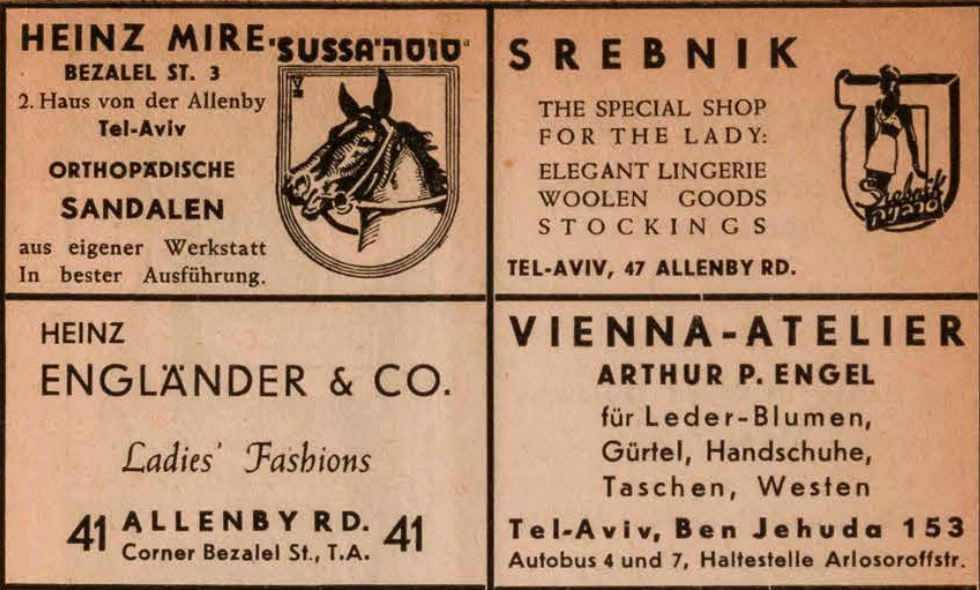
Herein, however, lies the central contradiction of these advertisements in the Jewish community of Mandatory Palestine: the new, imported consumerist ideals of luxury and individualism directly contradicted the collectivist ethos and Zionist ideals of the Yishuv.
Because of the pamphlet’s triumphalist narrative – its high levels of praise for the new immigrants and its celebration of their achievements in their new home of Mandatory Palestine – the group’s ideologically rose-tinted glasses turn a blind eye both to this contradiction and to one of the central experiences of these immigrants that accompanied this contradiction and their migration.
The determination of many German immigrants to preserve their language, cultural practices, and lifestyle reveals another dimension of their experience in Palestine. Their efforts to recreate elements of bourgeois German life suggest not simply resistance to assimilation but also a persistent attachment to a homeland and culture that had been irrevocably lost.
This sense of loss finds poignant expression in Leah Goldberg’s poem Tel Aviv 1935. Born in Kaunas and later educated in Berlin, from where she immigrated to Palestine in 1935, Goldberg shared many of the experiences of the German-speaking immigrant community. This poem, written retrospectively and published in 1964, expresses a longing for a lost European world that the celebratory rhetoric of 10 Jahre Neue Alijah leaves unspoken. It captures the emotional cost of migration and the nostalgia for lost homes and homelands that was felt by many members of the New Aliyah; feelings that were rarely expressed at the time, since doing so risked unsettling triumphant narratives and the ideological imperatives of Zionism.
תֵּל-אָבִיב 1935
הַתְּרָנִים עַל גַּגּוֹת הַבָּתִּים הָיוּ אָז
כְּתָרְנֵי סְפִינָתוֹ שֶׁל קוֹלוּמְבּוּס
וְכָל עוֹרֵב שֶׁעָמַד עַל חֻדָּם
.בִּשֵּׂר יַבֶּשֶׁת אַחֶרֶת
וְהָלְכוּ בָּרְחוֹב צִקְלוֹנֵי הַנּוֹסְעִים
וְשָׂפָה שֶׁל אֶרֶץ זָרָה
הָיְתָה נִנְעֶצֶת בְּיוֹם הַחַמְסִין
.כְּלַהַב סַכִּין קָרָה
אֵיךְ יָכוֹל הָאֲוִיר שֶׁל הָעִיר הַקְּטַנָּה
לָשֵׂאת כָּל כָּךְ הַרְבֵּה
,זִכְרוֹנוֹת יַלְדוּת, אֲהָבוֹת שֶׁנָּשְׁרוּ
?חֲדָרִים שֶׁרוֹקְנוּ אֵי-בָּזֶה
כִּתְמוּנוֹת מַשְׁחִירוֹת בְּתוֹךְ מַצְלֵמָה
,הִתְהַפְּכוּ לֵילוֹת חֹרֶף זַכִּים
לֵילוֹת קַיִץ גְּשׁוּמִים שֶׁמֵּעֵבֶר לַיָּם
.וּבְקָרִים אֲפֵלִים שֶׁל בִּירוֹת
וְקוֹל צַעַד תּוֹפֵף אַחֲרֵי גַּבְּךָָ
,שִׁירֵי לֶכֶת שֶׁל צְבָא נֵכָר
וְנִדְמֶה - אַךְ תַּחְזִיר אֶת רֹאשְׁךָ וּבַיָּם
.שָׁטָה כְּנֵסִיַּת עִירְךָ
Tel Aviv 1935
The masts of the houses’ roofs back then
were like the masts of Columbus’ ship
and every raven standing on their tips
heralded a different continent.
And the travellers’ bags walked in the street
and a language of a foreign land
was imbedded into the hamsin* day
like a blade of a cold knife.
How could the air of the little city
bear so many
memories of childhood, of loves that fell away,
of rooms emptied out somewhere?
Like pictures blackening inside a camera
clear winter nights were reversed,
rainy summer nights across the sea
and grey mornings of capital cities.
And the sound of a footstep drums behind your back
marching songs of a foreign** army,
and it seems – if you only (re)turn your head that in the sea
your city’s church is floating.
* A hot, dry wind that carries sand
** the word in Hebrew refers to a non-Hebrew army
(Own translation)
Bibliography
Alija Chadascha. 10 Jahre Neue Alijah. Tel Aviv: Zurah, ca. 1943. LBI London Pamphlet Collection, Leo Baeck Institute. URL: https://digipres.cjh.org/delivery/DeliveryManagerServlet?dps_pid=IE18215454
Goldberg, Leah. Tel Aviv 1935. URL: https://yossigoldberg.co.il/לאה-גולדברג-ותל-אביב.htm. [In Hebrew.]
Halamish, Aviva. “Palestine as a Destination for Jewish Immigrants and Refugees from Nazi Germany.” In Refugees From Nazi Germany and the Liberal European States, edited by Frank Caestecker and Bob Moore, 122–150. New York and Oxford: Berghahn Books, 2010. DOI: https://doi.org/10.1515/9781845457990-012https://doi.org/10.1515/9781845457990-012.
Jüdisches Museum München. Online Collection. URL: https://sammlung-online.juedisches-museum-muenchen.de/sammlung
Neumann, Boaz. Being in the Weimar Republic. [In Hebrew.] Tel Aviv: Am Oved, 2007.
Roth-Cohen, Osnat and Yehiel Limor. “The German (Fifth) Aliyah and the Development of Israel’s Advertising Industry.” Israel Studies Review 32 (2017). DOI: https://doi.org/10.3167/isr.2017.320208.