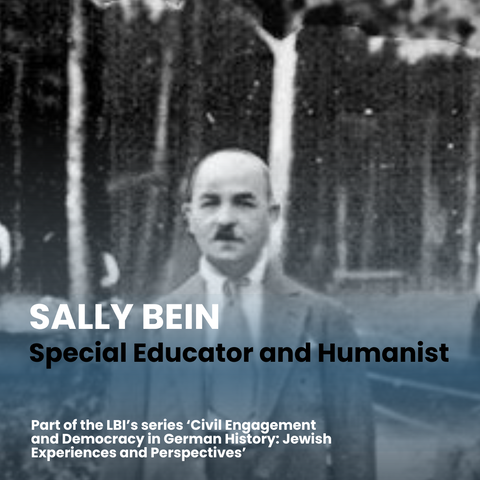
Sally Bein (1881–1942) served for many years as head and teacher of the Israelite Educational Institute in Beelitz, near Berlin, a pioneering establishment for children with intellectual or physical disabilities. Under his leadership, the school became a respected centre of therapeutic pedagogy, combining care, education, and vocational training. In 1942, Bein, together with his wife and the remaining pupils, was deported to Sobibor and murdered.
Tatjana Matanya Ruge works at a Jewish private school in Berlin. Since 2009, she has been researching the history of the Beelitz institute with her partner, Ronny M. Dotan. Together with Andreas Paetz, they published a short monograph on the institution and its director with Hentrich & Hentrich. Ruge and Dotan also organised the relocation of a Holocaust-era railway carriage to Netanya, Israel, where it now serves as a memorial site.
Lutz Vössing spoke with Tatjana Ruge and Ronny M. Dotan about the history of this early example of inclusive education.
How did you come across the story of Sally Bein?
Tatjana Ruge: It’s a bit of a story. One day, my husband Ronny called me from Israel and said he would send me a photo of a Stolperstein – one of the small memorial stones placed in front of victims’ last chosen residences – and asked me to interpret the inscription. When I looked at the photo, I was stunned by the final line: ‘Murdered 22.11.1940 Aktion T4’.
I asked him who the memorial was for, and he explained that it commemorated the uncle of his friend, Ronny Hahn. That puzzled me, so I asked how he had come across the photo and whether Hahn’s uncle had been disabled. ‘Why would he have been disabled?’ Ronny asked in return, promising to investigate.
Later it emerged that Hahn’s brother, while in the United States, had met a family who had taken part in a Stolperstein ceremony in Germany. They showed him a photograph of the stone. He was deeply shaken, because the name engraved on it was his mother’s brother – his uncle.
And then you began your research…
Exactly. The memorial centre in Bernburg told me that if there were any surviving files on victims of the Nazi ‘euthanasia’ programme, they would be in the Federal Archives. I contacted the archive, and a good friend of mine who works there called a few days later to say that a file on Hans Freimann did exist. When we met, he handed me a copy. It contained only a handful of pages – his admission to the State Hospital at Uchtspringe, his last place of residence. But one detail stood out immediately: under ‘Patient arrives’ it read, ‘Jewish Residential Home Beelitz’.
For most people, Beelitz is known for asparagus – and for its historic sanatoria.
That’s right! I grew up in Potsdam and often went on cycling trips there with my parents. But I had never heard of Jews in Beelitz, let alone a Jewish residential home for children with disabilities. That discovery was the starting point of our research into Sally Bein.
Where did Sally Bein come from? Do we know anything about his upbringing?
He was born Samuel Bein on 6 November 1881 in Hohensalza – today Inowrocław, in Poland. His father was a tailor, his mother a homemaker, and he had an older brother, Karl. Beyond that, little is known about his childhood.
He became director of the Israelite Educational Institute at just 26. How did he reach that position?
After finishing school in 1902, he studied at the Jewish Teacher Training College in Berlin, training both as a primary school teacher and as a specialist in deaf education. He completed his studies in 1906 and then worked as an instructor at the Israelite Institute for the Deaf, run by Dr Max Reich in Berlin-Weissensee.
And his wife, Rebeka? What role did she play?
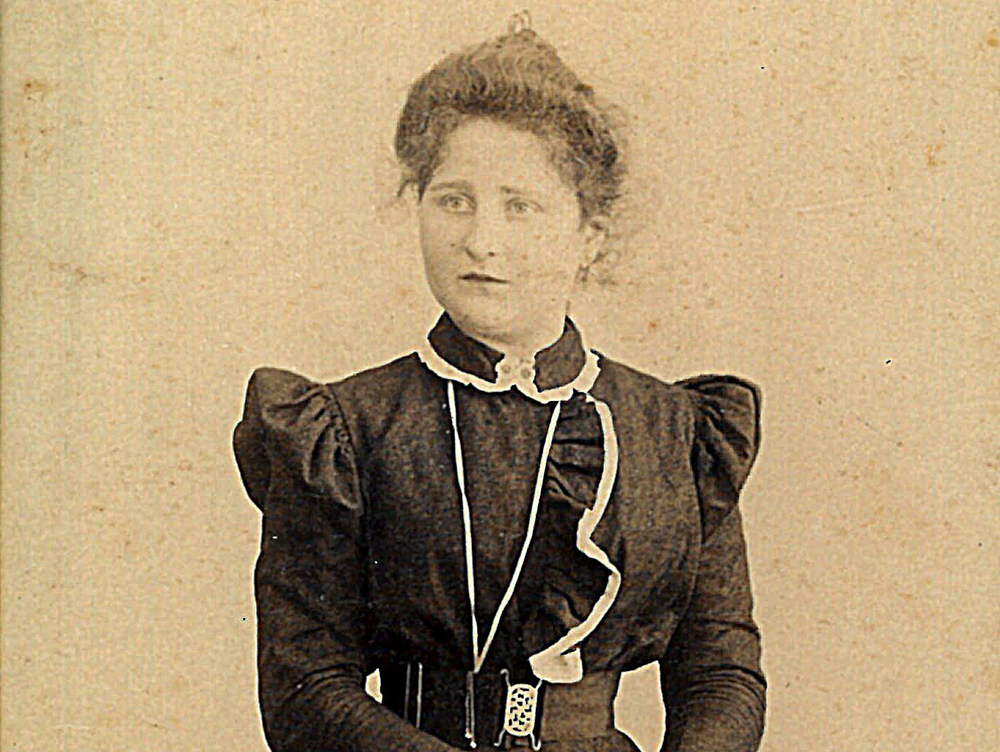
The sources tell us very little. What we do know is that she, too, was a qualified teacher. In fact, the director of the Beelitz institute was required to be married, so the two wed before Sally took up the post. Rebeka appears in the documents as a strong and supportive presence. She managed the household, oversaw the staff, and stepped in to teach whenever necessary. She was, in many ways, the spirit of the house.
Would you say they shared a vision for the school?
Very much so. Sally was the intellectual head and guiding force, but his wife and family were his source of strength. Together they created a warm and stable environment for the children.
Was there a particular pedagogical concept? What did teaching look like?
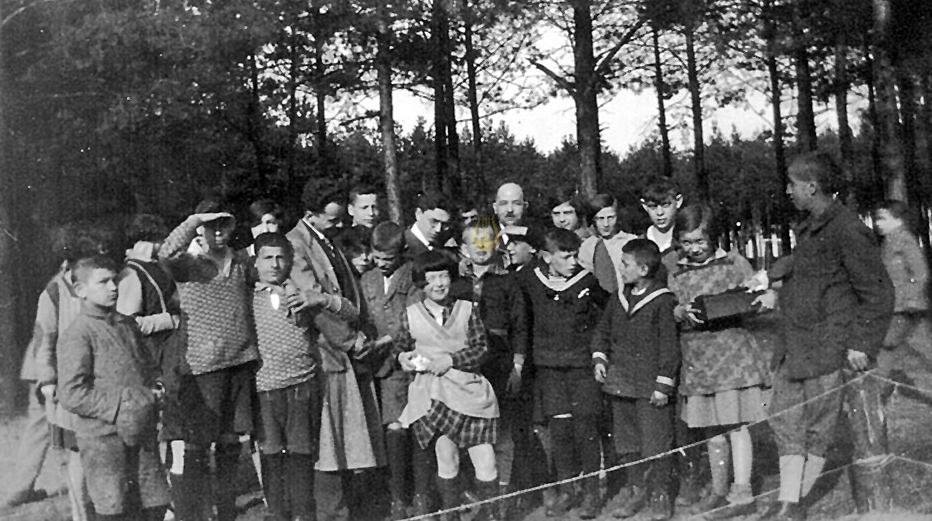
Yes. Bein developed the school’s educational concept himself, and it was formally approved by the Prussian Ministry of Education. His approach was strikingly pragmatic. Before admission, he assessed each child’s knowledge and placed them in classes according to ability rather than age. He insisted on strict health criteria – he only accepted pupils he believed could be educated, not cared for in a custodial sense. For example, if a child with epilepsy had been enrolled without disclosure, they were dismissed once the condition was discovered. This system allowed him to group children at similar learning levels and move them as they progressed. Once a child reached what he considered their limit – when no further improvement could be expected – he did not keep them on.
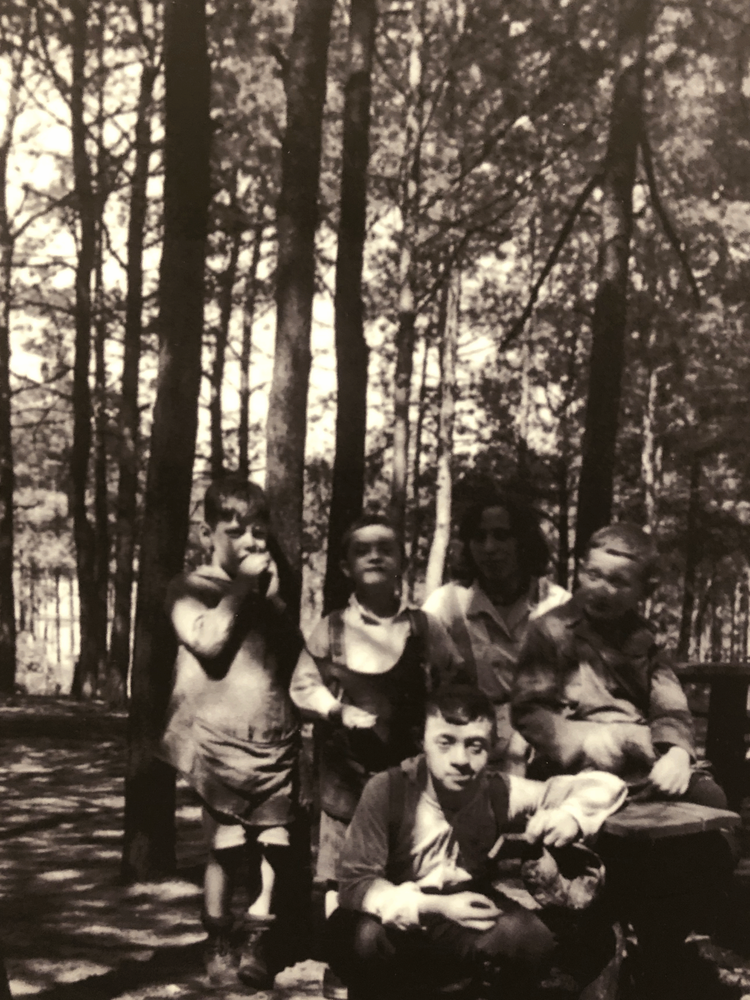
What kind of children attended the institute?
They came from very different backgrounds. Some were from wealthy families who had hoped their children might one day run a family business, but eventually had to recognise their limitations. Others came from poor families and were placed at the school through social services or with the support of local rabbis. The boundary between ‘disability’ and ‘non-disability’ was drawn very differently then: children with impaired vision or behavioural difficulties – what we would today describe as ADHD – were often considered disabled.
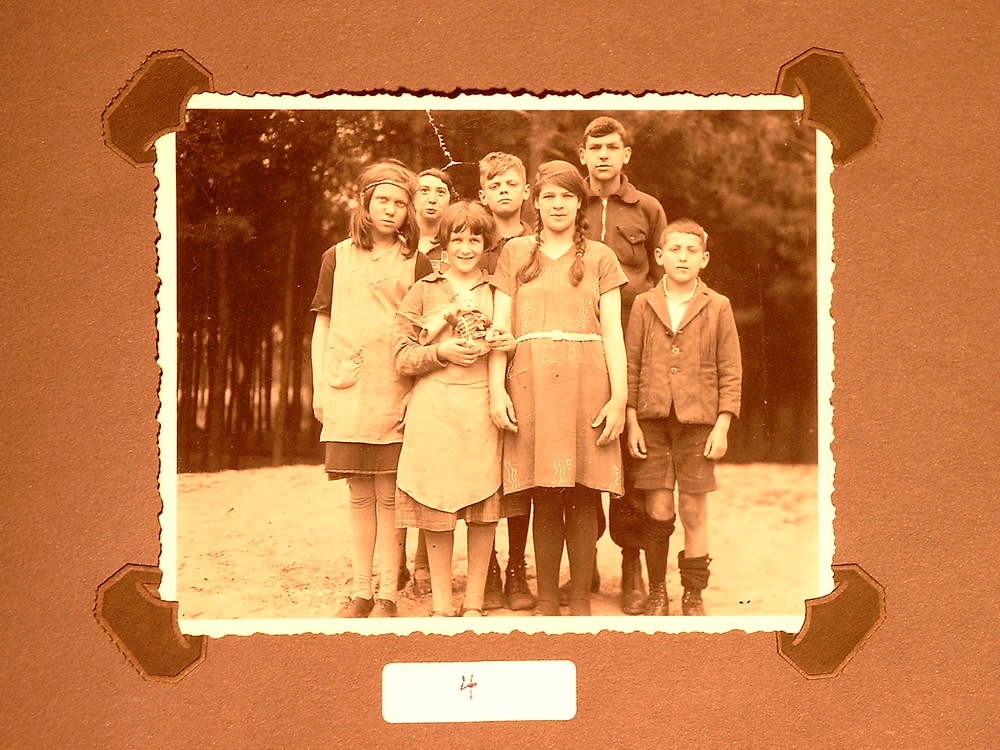
And what prospects did these pupils have?
Bein placed great emphasis on vocational training, wanting his pupils to be able to lead independent lives. Within the home, boys were trained as carpenters, tailors, or bookbinders, while girls learned skills such as domestic service or sewing.
How was the institution viewed from outside?
Bein himself was highly respected in Beelitz, and he established good relations with the local community. In times of food shortage, he could count on the support of nearby farmers. His teaching methods became known well beyond Beelitz, drawing pupils from different regions. Some parents even ascribed almost miraculous powers to him, hoping he could prepare their sons to take over factories or law practices – though such hopes were often unrealistic. His work attracted interest not only from within Germany, particularly through the German-Israelite Community Federation, but also internationally. Visitors came from as far as Asia and Palestine to study his methods.
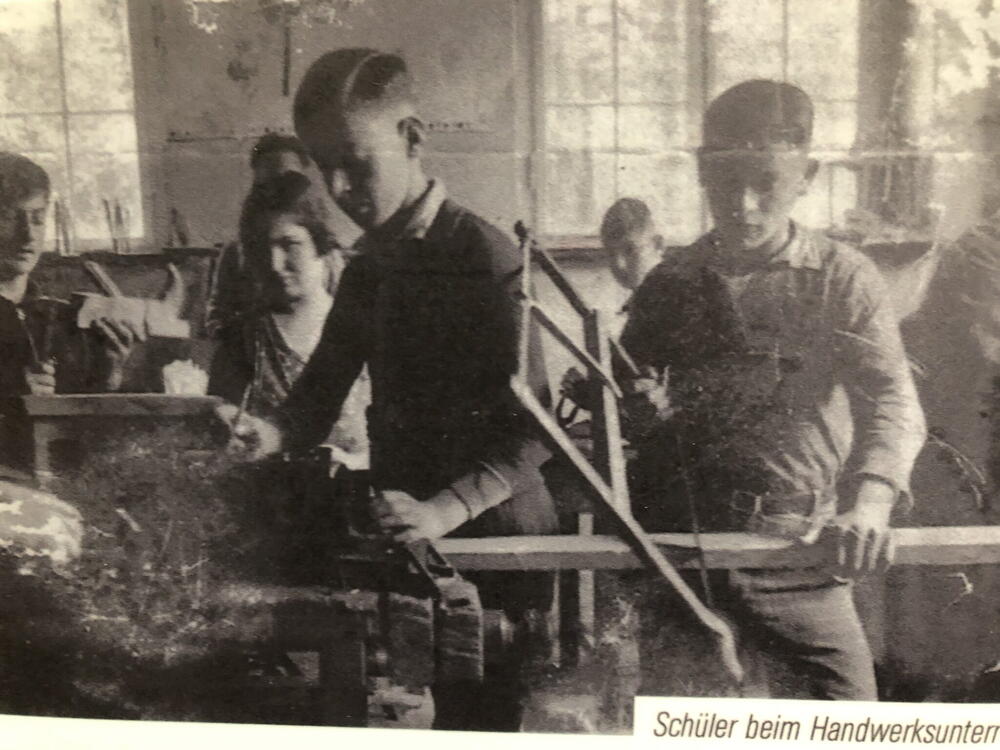
What is your assessment of the significance of the institute and of Sally Bein’s work, both for the Federation and for disability education in Germany? What influence did he have?
The Israelite Educational Institute in Beelitz was only one of many institutions supported by the Federation, but its leaders and teachers were pioneers. Sally Bein’s work laid important foundations for what we would today call inclusive and therapeutic education. His model was rooted in one of Judaism’s central commandments: to leave no one behind and to care for the most vulnerable. Bein was not only the director but also the heart and soul of the school, working closely and personally with the children. Unlike Janusz Korczak, who left extensive writings, Bein had little time for academic treatises – the demands of daily life in the school left him fully absorbed.
Are there personal recollections or testimonies from former pupils or colleagues about the school and the Beins?
Sadly, almost none. Much of our research has focused on recovering the names of the children who passed through Beelitz. My greatest wish was to find a survivor who could speak about their experiences there, but that wish went unfulfilled. Testimonies from former pupils or staff are virtually non-existent. We have only a few fragments, such as excerpts from a teacher’s letters mentioning Bein and the school. Beyond that, only archival records remain.
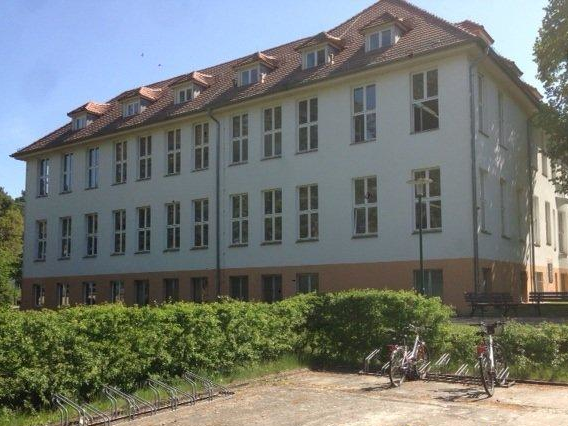
What more can the archives tell us?
Our first priority was always to recover the children’s names. Through painstaking work in archives, we have been able to identify around 400 who attended the school over the years. That work has created a powerful sense of connection to the life of the institution. After hours spent at the microfilm readers, one can almost hear the children’s laughter, their footsteps on the stairs, the teachers’ voices echoing through the halls.
Text: Lutz Vössing
This article is part of the series ‘Civil Engagement and Democracy in German History: Jewish Experiences and Perspectives’, first published in German as Engagement & Demokratie in der jüdisch-deutschen Geschichte by the Freunde und Förderer des Leo Baeck Instituts. You can read the article in the original German here: https://fuf-leobaeck.de/2025/08/sally-bein-sonderpaedagoge-und-humanist/