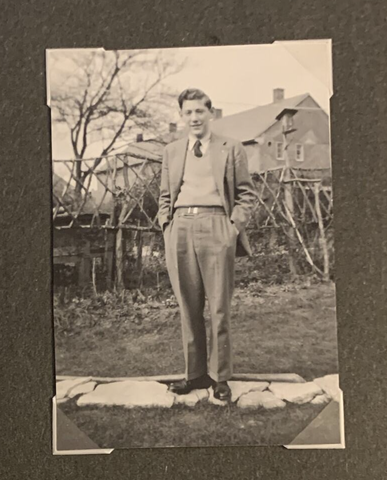
This archive preserves the oral history of a life entirely shaped by the shifting borders of 20th-century Europe. Born to a family caught directly in the crosshairs of geopolitical upheaval, this is the account of a young boy who was forced to flee his home in the Sudetenland, arriving in the United Kingdom with no English, no money, and a passport stamped with Nazi insignia. Through these selected excerpts, we trace the journey of a child navigating displacement, wartime Britain, and the complex architecture of survival, language, and memory. His reflections offer a profound window into what it means to be uprooted by history – and the enduring temperament required to look toward the next horizon.
1. The Escape via Train
Reflecting on his father’s harrowing rail journey out of Germany, and the razor-thin margin of safety at the border checkpoint.
He took a train across Germany. He had a hair raising journey. People, strange people kept getting into his compartment, and one of them would sit down and engage him in conversation for a lengthy time, quizzing him. And before he left, he turned his lapel to show the Gestapo incident and said signal. And he just. He made it to the Dutch border and at the Dutch border, the Dutch were in the complete tizzy, for obvious reasons. And didn’t know quite what to do with this train, which was largely full of refugees, and they decided to split it in two. And my father was in the last compartment of the fourth carriage of eight trains. So there’s four carriage loads of people were sent back to. They do. And my family got in.
2. Arrival in Harwich
Landing on British soil on his fourth birthday, meeting a new reality with no resources or language.
And so we arrived in Harwich exactly on my fourth birthday, the 11th of June, 1939. What a day for the birthday to remember. Yeah, exactly. Anyways. And then. So off we trundled to, London, where we joined up with my father and we were in digs in, Stretton. Now, the thing is that. We had no money at all, and we had nothing that could be sold for money. We knew nobody and we didn’t speak English…
3. The Air Raid over York
A visceral recollection of stepping into the night during a bombardment, captured through unforgettable sensory sounds.
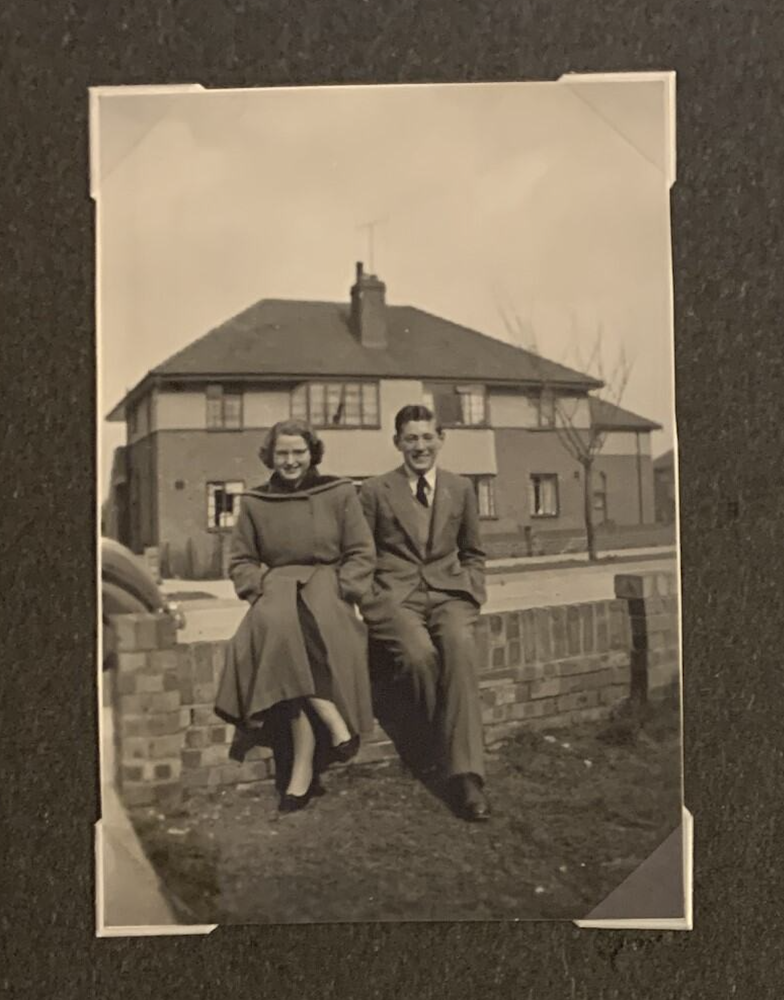
And so everyone trooped up out of the cellar into the open air, and it was like a scene from Hieronymous Bosch. You could imagine, first of all, the noise, the anti-aircraft guns and the bombs to start. Then the sky is full of searchlights. You know, the searchlights would catch a plane and then bang, bang, bang, bang, bang, bang. And then - I’m so deeply into aircraft - German aircraft have a completely different sound to British aircraft, and they could never get that engine synchronized properly. So you go for what is known as a beat frequency, a very low pitched whoo hoo noise. And I can remember that very clearly. And so and of course, barrage balloons there, which are also caught by the searchlights. And it was just absolutely spectacular. And I was terrified.
4. Conclusion: The Temperament of an Explorer
A final thought on how childhood displacement permanently shapes a human being’s outlook on the unknown.
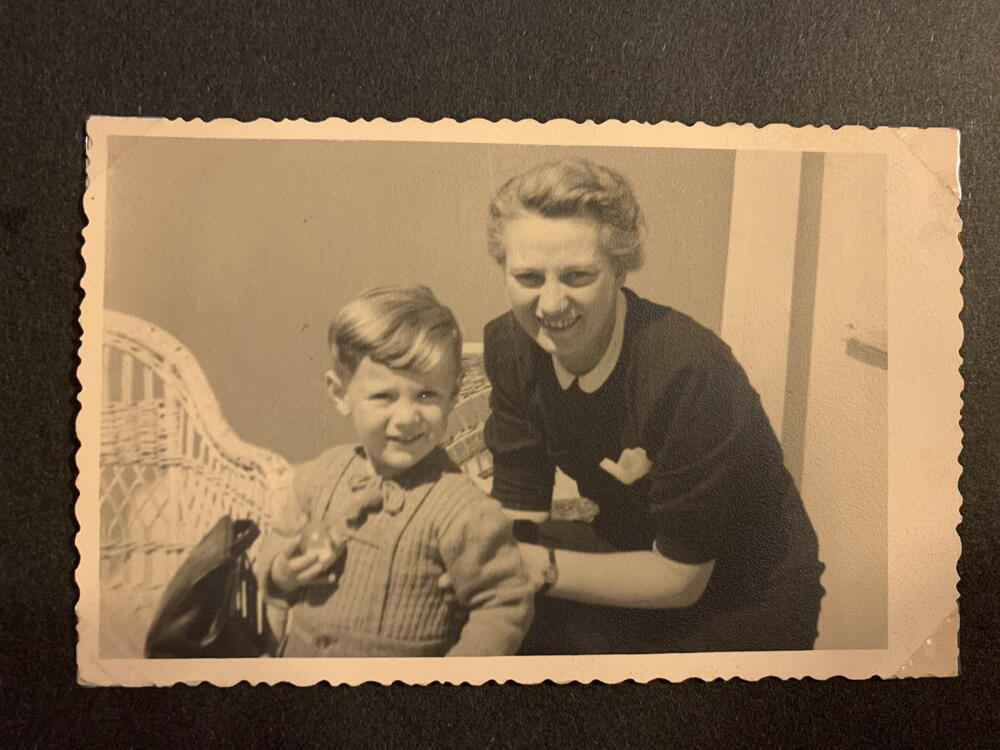
But there’s also the there’s also, of course, the question of temperament. I’m one of these people always wants to know what’s around the next corner. And there other people always want to be within their comfort zone. And, it was always my ambition. I mean, I can remember writing an essay on the subject at track boarding school, about what you wanted to be when you grew up. And I wanted to be an explorer.
This testimony highlights a powerful truth about displacement: that identity is not fixed by a single point on a map. From escaping the shadows of occupied Prague to spending a lifetime navigating new communities, cultures, and industrial careers in Britain, this narrative remains a testament to resilience. It reminds us that when the borders of the world shift violently, survival requires an open mind – a mindset that doesn’t just seek a comfort zone, but possesses the curiosity to find out exactly what lies around the next corner.