Dr Monja Stahlberger is the Leo Baeck Institute London’s Postdoctoral Research Fellow for 2025–26. Her current research project explores how German-Jewish exile families have transmitted cultural memory and negotiated identity across borders and generations, from the National Socialist period to the present. Drawing on archival materials and oral histories, her study uncovers how individual narratives reflect broader patterns of cultural adaptation, trauma transmission, and transnational belonging within German-Jewish exile communities.
The project adopts a transnational comparative approach, examining ego-documents such as diaries, memoirs, and oral histories alongside organisational records and academic publications. This methodology enables the analysis of how different national contexts shaped the preservation and transformation of German-Jewish cultural memory. Archival evidence reveals processes of identity negotiation that challenge simple categories of national or religious belonging.
Language emerges as a crucial site of cultural negotiation, particularly in the context of exile. Reflections on decisions around children’s linguistic upbringing reveal the conscious and often difficult choices families faced about whether to transmit the German language. These choices highlight broader generational tensions between preserving cultural heritage and adapting to a new environment. Evidently, an ambivalence toward German linguistic identity frequently persisted across generations. Even decades later, some exiles express discomfort at being identified as foreign or marked by a German accent, underscoring the enduring complexities of navigating cultural and national belonging.
Second-generation testimonies reveal recurring patterns of trauma transmission and the negotiation of memory within families affected by National Socialist persecution and displacement. Personal accounts often reflect how parental trauma shaped emotional dynamics and disrupted a free exploration of cultural identity. These testimonies highlight how trauma created barriers to open communication and cultural transmission, even as it continued to define family identity. For example, the denial or suppression of Jewish identity by survivor parents, as described in several accounts, illustrates how trauma could both preserve and fragment cultural memory. Comparing first- and second-generation oral histories from the same families further uncovers these dynamics.
This research contributes to existing scholarship by further demonstrating how cultural memory transmission operates through informal networks and family practices as much as through formal institutions. The notion of ‘transnational belonging’ appears throughout the sources as families maintained connections across multiple national contexts while never fully settling into singular national identities. Crucially, the German-Jewish exile experience reveals cultural memory transmission as a complex, ongoing process shaped by trauma, displacement, and adaptation. Rather than simple preservation or loss of heritage, the archival documents demonstrate negotiations between multiple cultural identities that created new forms of transnational belonging.
Main image by Carola68 Die Welt ist bunt from Pixabay.
![Example of output from the Gesher Project, a multidisciplinary and intergenerational project exploring the legacy of the Holocaust (Second Generation 1/2 [Loose-leaf binder]: 2020.042.188, Vancouver Holocaust Education Centre)](/sites/default/files/2025-07/monja%20research%20photos%204.jpeg)
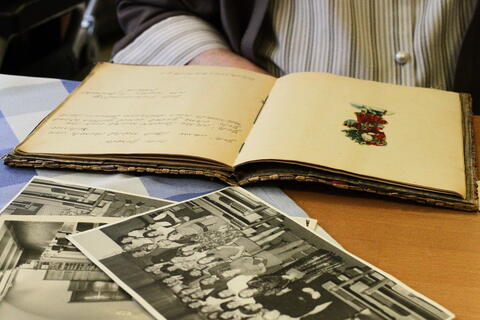
![Diary cover of Hilde’s diary Volume XXVIII, Fred Arnrich collection (Hilde's Diary Vol XXVIII, 2019.041.037, Fred Arnrich diaries [accession 2019.041], Vancouver Holocaust Education Centre)](/sites/default/files/2025-07/monja%20research%20photos%203.jpeg)
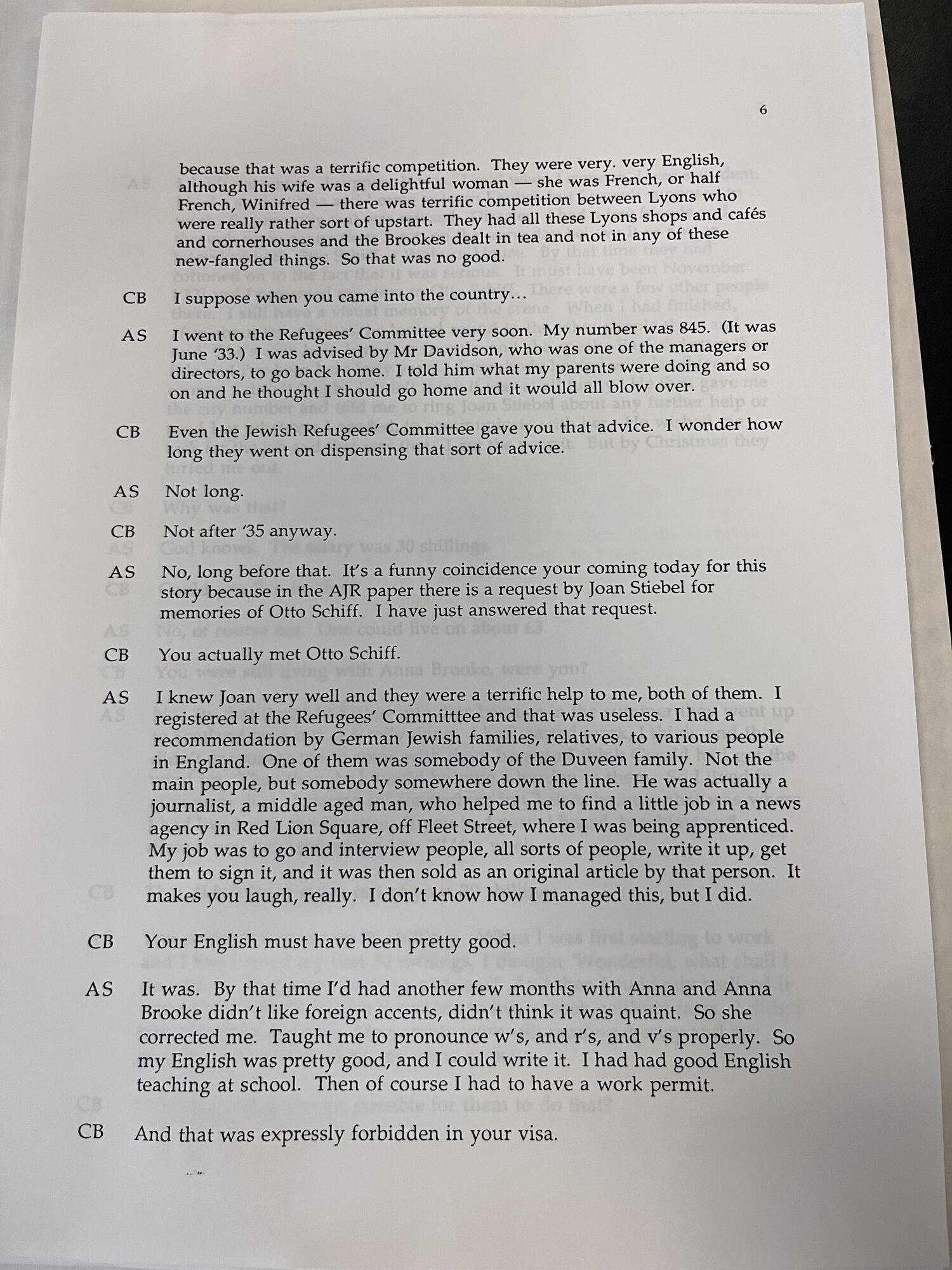
![Gertrude Ascher typescript of her life story written on 5 January 1946 and 27 March 1962 titled “How I came over to England in 1939 and how I lived in England and Scotland” (EXS.2.ASC: Gertrude Ascher papers, [c1946]-1988, Exile Collection, Senate House Library)](/sites/default/files/2025-07/monja%20research%20photos%201.jpeg)