Skip to main content Leo Baeck Institute London | Leo Baeck Institute London

Leo Baeck Institute London

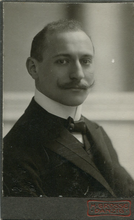
Eduard Bernstein - Democratic Socialist and Labour Activist

Eduard Bernstein (1850–1932) was a German Social Democrat, democratic socialist, and founder of revisionism. From 1878 onwards, he lived abroad, working as a journalist and making a name for himself as a critic of Marxist theory. Bernstein, for example, rejected the idea of an inevitable collapse of capitalism. Instead of revolution, he placed his hopes in democratic reform, approved of cooperation with liberal forces, and advocated the creation of a socialist people’s party.

Jewish Holocaust Memory and East German Antifascism

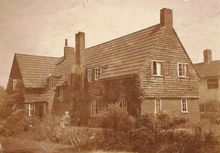
What role did Jewish survivors in the German Democratic Republic play in the cultural debate on the Holocaust and National Socialism? How could Jewish experiences of persecution and antifascist convictions be negotiated and articulated in the face of history, politics, and state- imposed acts of remembrance? Drawing on personal documents and works by authors like Arnold Zweig and neglected historian Helmut Eschwege, the talk explores these questions and shows Jewish and, in some cases, non-Jewish actors’ motivations and options for action.

Final Call: Leo Baeck Fellowship 2026/27 Applications

13 January 2026

Final call for applications: the Leo Baeck Fellowship Programme 2026/2027 (German academic year October 2026 – September 2027) invites PhD students working on German-Jewish history and culture to apply.​

The programme is jointly organised by the Leo Baeck Institute London, the Leibniz Institute for Jewish History and Culture – Simon Dubnow in Leipzig, and the Studienstiftung des deutschen Volkes, and is open to PhD candidates worldwide.​

Applications close on 1 February 2026.​

For full details and information on how to apply, please visit: https://www.lbilondon.ac.uk/fellowship.

Conference ‘Beyond Camps and Forced Labour’ examines lives of Nazi persecution survivors

8 January 2026

The three-day conference ‘Beyond Camps and Forced Labour: Current International Research on Survivors of Nazi Persecution’ is under way in London, running from 7–9 January 2026. Scholars, educators and archivists from around the world are examining the long-term experiences of those who survived Nazi persecution, including issues of displacement, memory and representation.​

Taking place at Birkbeck, University of London, and The Wiener Holocaust Library, the event looks at the post-war lives of Jews, Roma and Sinti, political prisoners, forced labourers and other persecuted groups. Panels address themes such as testimony, intergenerational memory and new approaches in research and public history.​

Leo Baeck Institute London pays tribute to Holocaust survivor Eva Schloss

5 January 2026

The Leo Baeck Institute London is deeply saddened by the death of Holocaust survivor, author and educator Eva Schloss, who has died in London aged 96. Her remarkable life story, recently featured in the Institute’s film club, offered a powerful window into the experiences of German‑speaking Jews before, during and after the Holocaust.​

Born Eva Geiringer in Vienna in 1929, she grew up in an assimilated Jewish family before antisemitic persecution forced them to flee first Austria and then Nazi‑occupied Europe. The family settled in Amsterdam, where they joined a German‑speaking refugee community and lived opposite the Frank family on the Merwedeplein.​

New Snapshot: Life and Death (Mask) of Gershom Scholem

20 December 2025

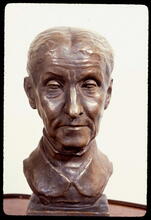
We’re delighted to share our latest Snapshot of German-Jewish History and CultureLife and Death (Mask) of Gershom Scholem - which is now available to read on our website.

This feature looks at the life and work of German-Jewish philosopher and historian Gershom Scholem who is widely regarded as the founder of modern academic study of Jewish Mysticism. The Leo Baeck Institute archives in New York house a wealth of material documenting Gershom Scholem’s intellectual legacy, including manuscripts, a collection of personal correspondence and his death mask.


Tags

Meet the Leo Baeck Fellows: Annika Duin, 2025-26 cohort

16 December 2025

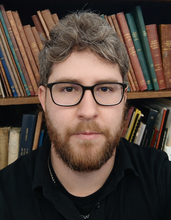
The latest feature in the Leo Baeck Institute’s Meet the Fellows series introduces Annika Duin, whose research examines how West Germans responded to antisemitism after 1945. Drawing on letters written by non-Jewish citizens to Jewish individuals and communities, her work traces how people discussed guilt, responsibility, and the Nazi past in everyday correspondence.


Can you briefly describe your doctoral research project for a non-specialist audience? What drew you to this particular topic?

New Leo Baeck Fellows Announced for 2025-26

16 December 2025

The Leo Baeck Institute London, together with its partners, is pleased to announce the 2025-26 cohort of Leo Baeck Fellows, a new group of outstanding doctoral researchers working on the history and culture of German-speaking Jewry, whose profiles and projects are showcased on the Fellowship’s website.

The 2025-26 fellows are doctoral candidates at universities in Europe, Israel, and the Americas whose projects span history, literature, philosophy, and cultural studies. Their work explores German-Jewish life in diverse places and periods, continuing the programme’s tradition of supporting up to ten excellent early-career scholars each year.

Snapshot: Life and Death (Mask) of Gershom Scholem

Gershom Scholem (1897–1982) remains one of the most influential figures in modern Jewish scholarship. Born Gerhard Scholem in Berlin into a cultured, assimilated Jewish family, his early life was marked by a profound intellectual rebellion. At a young age, he rejected the secular rationalism dominant in German-Jewish circles, turning instead to Jewish mysticism – the Kabbalah – which had been neglected or disparaged within traditional Jewish studies. Emigrating to Jerusalem in 1923, he adopted the Hebrew name Gershom and devoted his life to the rigorous study of Jewish mysticism.

Remembering Hannah Arendt: Fifty Years On

4 December 2025

Today, 4 December 2025, marks 50 years since the death of Hannah Arendt, the German‑Jewish political thinker whose work continues to shape how democracies understand power, evil and responsibility. Widely regarded as one of the 20th century’s most original public intellectuals, she was also among the founders of the Leo Baeck Institute, helping to establish it as a key centre for the study of German‑speaking Jewry.​

Subscribe to our Newsletter

Latest Publications